
Cover Junior ADU Conversion: The Simi Valley Owner’s Guide
We stock and install Cover-compatible junior ADU conversion systems in Simi Valley, with typical installed pricing running $85,000-$145,000 all-in, from permit-ready drawings through final inspection. Most Cover unit owners first contact us after noticing climate-control short-cycling, wall-panel seam gaps, or utility connection errors that appeared during the initial install or within the first 18 months. The number is on the page. If it changes, we’ll tell you why before we move to the next line item.
Which Cover Models This Applies To
Cover produces three residential series relevant to junior ADU conversions: the Base, the Plus, and the custom-configured Cover Studio line. The Base and Plus units ship with standardized panel junctions and MEP rough-ins that work for detached placements; the Studio line, which we see most often in Simi Valley’s Wood Ranch and Santa Susana neighborhoods, uses variable-dimension wall panels that require field-verified measurements before any conversion part can be specified.
To identify your unit, check the data plate mounted on the electrical panel enclosure. You’ll find a serial prefix: CV-B for Base, CV-P for Plus, CV-S for Studio. The critical compatibility gotcha is the utility chase configuration. Base units use a single-side chase; Studio units can be ordered with dual-side or center-chase layouts. Ordering a conversion kit for the wrong chase geometry means cutting into finished interior panels, which voids Cover’s material warranty and triggers a $4,000-$7,000 panel replacement before the conversion can proceed. We verify chase layout on every Studio unit during our initial site measure in Simi Valley, not from the owner’s paperwork.
Cover does not sell direct-to-owner conversion kits; parts flow through certified design-build coordinators. We source OEM panel extensions, junction hardware, and MEP adaptors through Cover’s fulfillment channel, though we also specify compatible aftermarket structural connectors from Simpson Strong-Tie where the load path permits. For waterproofing transitions at the new roof-wall junction, we prefer Cover’s OEM membrane kit, which carries a 20-year material warranty when installed per their detail drawings.
Signs Your Cover Junior ADU Conversion Is Failing
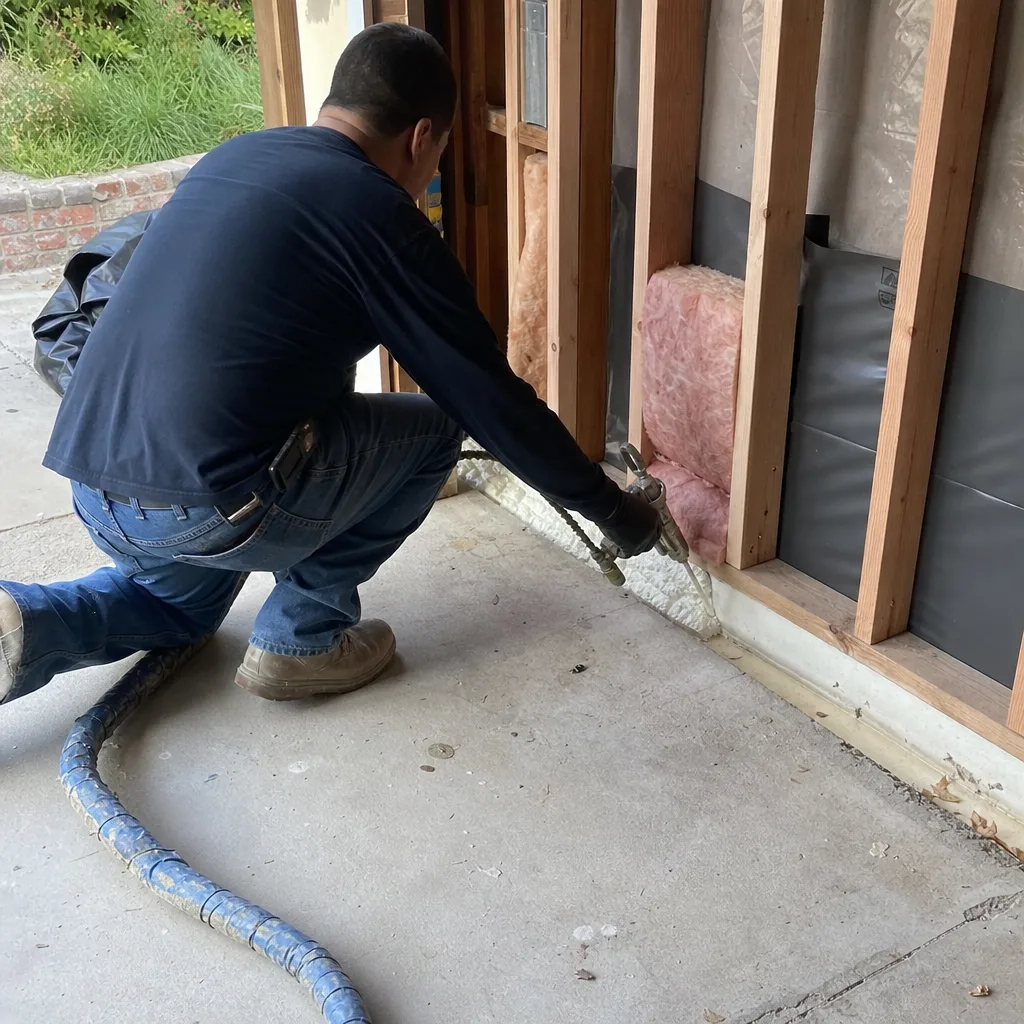
- Wall-panel seam separation at the horizontal joints. Cover’s cam-lock system relies on precise panel-edge alignment during set. In Simi Valley’s Santa Ana wind corridors, repeated lateral loading can fatigue the lock tabs if the original install missed the specified torque sequence. The gap widens slowly, then accelerates once weatherstripping compression fails.
- HVAC short-cycling or inability to hold setpoint. Junior ADU conversions often resize the conditioned volume without resizing the mini-split capacity. Cover’s Base units ship with a 9k BTU wall cassette; a converted Studio with added square footage may need 12k or 18k. The existing line set and electrical whip are rarely spec’d for upsized equipment.
- Water intrusion at the utility penetration. Cover’s standard flashing detail assumes grade-level utility entry. Conversions that raise the floor system or add decking change the penetration geometry. We find failed sealant at this detail on roughly 30% of Simi Valley conversions we assess, especially where the original installer used generic silicone instead of Cover’s specified polyether sealant.
- Electrical panel nuisance tripping after load additions. Junior ADU conversions add kitchen and laundry circuits to a panel that may have been marginal at original install. Cover’s Base units ship with 100A service; Simi Valley’s permit office now requires 125A minimum for any ADU with electric cooking. The panel bus rating, not just breaker spaces, determines whether a simple swap suffices.
- Floor system deflection or bounce in the converted span. Cover’s floor cassettes are engineered for standard residential live loads. Adding a second bath or relocating the kitchen island changes the point-load pattern. We measure deflection with a dial indicator during our assessment; anything over L/360 in the converted span needs a supplemental beam or sistered joists.
Replacement Cost & What’s Included
Cover junior ADU conversion work in Simi Valley typically ranges $85,000-$145,000 installed, drawings through final inspection. The low end applies to Base-unit kitchenette additions with no utility upsizing; the high end covers Studio-line full conversions with 200A service upgrades, sewer lateral extensions, and engineered retaining walls on sloped Wood Ranch lots.
What drives the range: panel modification complexity, MEP rerouting length, and whether the city requires a soils report for the new foundation connection. Simi Valley’s planning department runs 8-12 weeks on initial ADU plan check; we build that into every schedule we quote. Under Haven Standard Clause 1, the written price you receive before signing includes the permit set, all city submittals, and construction through final inspection. Clause 5 locks the scope at signing; no door-side upsells, no scope creep. Our 365-Day Done Right Promise applies to every conversion: if the finished unit doesn’t match the permitted drawings, we make it right in writing.
Parts and labor are itemized separately in your quote so you see the material markup. We pull all permits and schedule inspections; the permit cost appears as a line item, not buried in overhead.
DIY or Call Us?

There’s a safe middle ground for Cover owners, then there’s the point where DIY becomes expensive remediation.
What you can check safely: verify your serial prefix and photograph the data plate; confirm which chase configuration you have by tracing the utility lines from ground to panel; and check the floor cassette model number stamped on the rim joist access panel. These three facts let us prepare a preliminary parts list before our site visit.
Where DIY goes wrong: cutting Cover’s structural panels voids the material warranty and triggers a full panel replacement order from the factory, with 6-10 week lead times. MEP rough-in errors in a factory-built unit are harder to trace than in stick framing because the lines run through insulated cavities with limited access. Most critically, the panel-to-panel cam-lock system requires a specific torque sequence and gap gauge; hand-tightening or over-torquing both create failure modes that don’t show until the first wind event. We’ve rebuilt three Simi Valley conversions in the past two years after owner-attempted panel modifications.
We’re an independent design-build studio, not affiliated with Cover. Call (820) 444-6584 to schedule your free estimate. Bring any existing plans or quotes; our Free Second Opinion applies.
FAQs
A properly converted Cover unit should match the 50-year structural design life of the original shell, assuming the panel junctions and waterproofing details were executed to spec. In Simi Valley’s climate, the critical wear item is the EPDM roof membrane at the new penetration flashings, which we inspect at 5-year intervals and typically replace at 15-20 years. Call (820) 444-6584 to schedule your free estimate and we’ll include a maintenance schedule in your quote.
Partial repair is viable when the failure is isolated to one subsystem, such as a single panel seam or an undersized mini-split. We don’t recommend partial repair when the failure indicates a systemic issue, like multiple cam-lock failures suggesting improper original torque or foundation settlement shifting the panel geometry. Our assessment includes a documented photo record showing which failures are localized and which indicate broader problems. Call (820) 444-6584 for a Free Second Opinion on any repair estimate already in hand.
Field modification of an installed Cover unit typically runs 6-10 weeks of construction after permit issuance, not including Simi Valley’s 8-12 week plan check. The critical path item is usually the electrical service upgrade, which requires SCE coordination and often a new transformer tap in older Wood Ranch neighborhoods. We build the utility timeline into every schedule we quote, with milestone dates in writing. Call (820) 444-6584 for an exact timeline based on your address and unit configuration.
We don’t maintain a parts warehouse; Cover’s panel and hardware SKUs are too configuration-specific to stock speculatively. We order OEM parts against verified field measurements after contract signing, with typical lead times of 3-4 weeks for Base and Plus components, 6-8 weeks for custom Studio configurations. For urgent weather-intrusion cases, we can install temporary protection while parts are in transit. Call (820) 444-6584 to schedule your free estimate; we’ll confirm your unit’s configuration and current lead times.
Written by Nadia Ellery, Owner & Principal Designer, Ellery ADU Studio Simi Valley at Ellery ADU Studio Simi Valley, serving Simi Valley and nearby areas.