
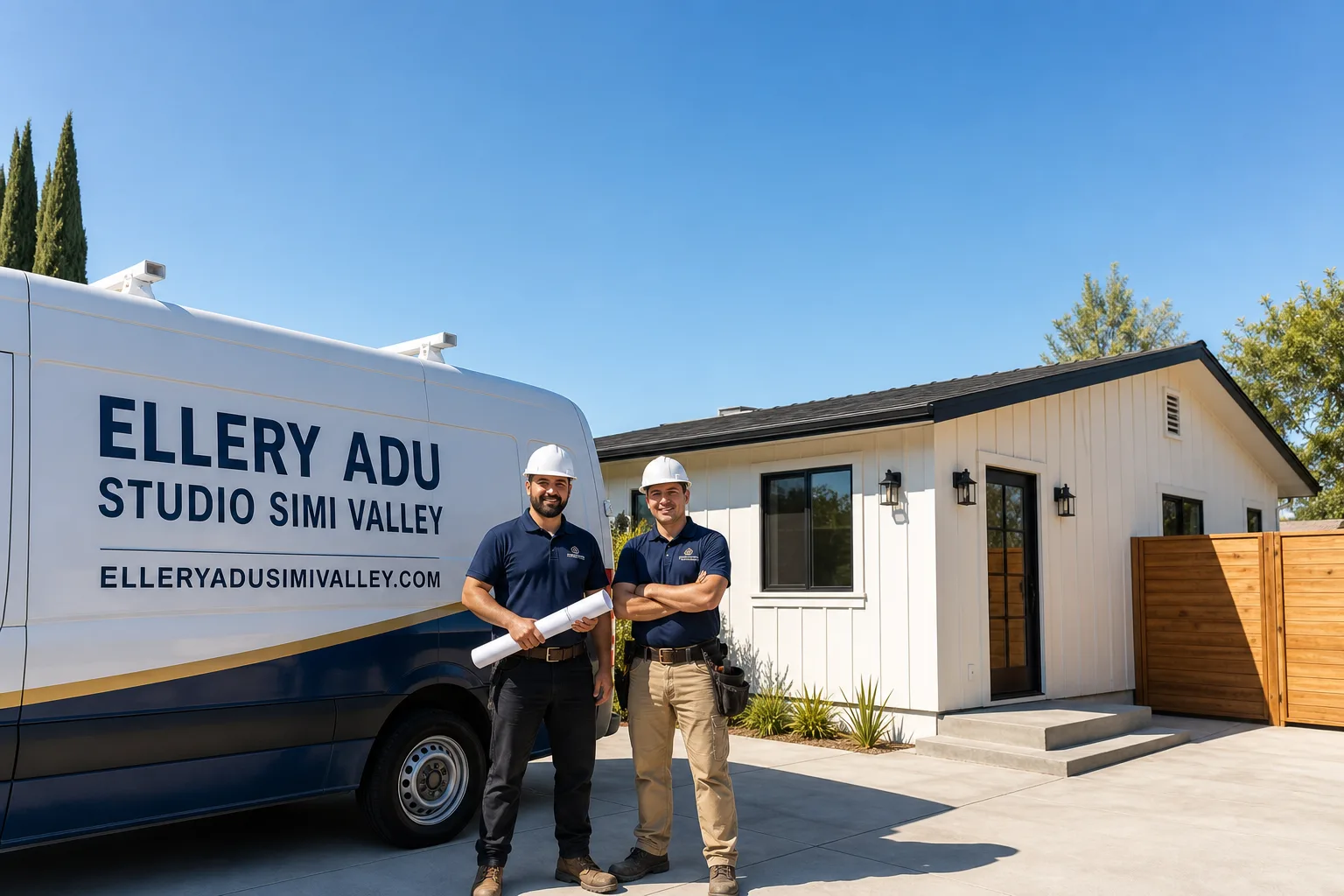
How Much Does a New Detached ADU Cost in Simi Valley?
A new detached ADU in Simi Valley, CA typically costs between $180,000 and $420,000 all-in, covering design, permit set, site prep, and construction through final inspection. Most homeowners in Simi Valley land somewhere between $220,000 and $320,000 for a well-specified 600-900 sq ft unit on a standard lot. The wide range is real, and it’s driven by size, site conditions, finish level, and whether you’re building stick-frame or coordinating a prefab system like an Abodu or Cover unit.
New Detached ADU Cost Breakdown (2026)
Below is the line-item cost structure Ellery ADU Studio uses when preparing written quotes for Simi Valley projects. Every number on this table reflects what we’ve seen on permit sets and invoices in the local market through early 2026, not national averages from a trade publication.
| Line Item | Typical Range (Simi Valley, 2026) | Notes |
|---|---|---|
| Architectural drawings & permit set | $8,000 - $18,000 | Includes title 24 energy calculations, structural, and civil sheets required by Simi Valley’s building division |
| City permit fees (Simi Valley) | $4,500 - $12,000 | Varies by valuation method; Simi Valley uses a fee schedule tied to square footage and assessed construction value |
| School fees (Ventura County Unified) | $3,500 - $6,500 | SB 9 and ADU law exempts junior ADUs; new detached ADUs under 500 sq ft may also qualify for exemption – confirm at permit submittal |
| Site prep & utilities | $18,000 - $55,000 | Sewer lateral, water service, electrical panel upgrade, and any grading; Simi Valley’s hillside lots in Wood Ranch and Santa Susana Knolls often push this higher |
| Foundation | $14,000 - $32,000 | Slab-on-grade is standard on flat lots; Bridle Path and Berylwood lots with slope may require deepened footings or grade beams |
| Framing & structure | $28,000 - $62,000 | Stick-frame is most common in Simi Valley; prefab modular panels (Mighty Buildings, Plant Prefab) can compress this line |
| Roofing | $8,000 - $18,000 | Concrete tile is common in Simi Valley HOA zones; flat membrane roofs on contemporary designs run lower |
| Exterior cladding & windows | $12,000 - $28,000 | James Hardie fiber cement is our standard spec for Simi Valley’s hot, dry summers and Santa Ana wind cycles |
| MEP (mechanical, electrical, plumbing) | $22,000 - $48,000 | Title 24 compliance requires heat pump HVAC systems on new construction in Ventura County; no gas furnace allowance on detached ADUs built after 2023 |
| Insulation & drywall | $9,000 - $18,000 | Simi Valley’s climate zone (CZ9) has specific insulation minimums – your permit set will document the required R-values |
| Interior finishes (cabinets, flooring, tile) | $18,000 - $55,000 | The single biggest variable after site conditions; same floor plan at entry vs. elevated finish level shifts cost by $30k+ |
| Appliances & fixtures | $4,500 - $12,000 | Spec-grade vs. premium makes a real difference here |
| Landscape restoration & hardscape | $5,000 - $18,000 | Concrete flatwork, fencing, and irrigation repair after utility trenching |
| Soft costs (soils report, survey, HOA submittal) | $2,500 - $8,000 | Not all Simi Valley lots require a soils report, but Wood Ranch and Tierra Rejada hillside lots frequently do |
What This Adds Up To
Add those line items up and you get a realistic all-in range of $158,000 on the absolute low end (small, simple, flat lot, entry finishes) to $430,000 on the high end (large unit, hillside lot, premium finishes, prefab system). The middle of the market in Simi Valley, where most of our projects land, sits between $220,000 and $330,000.
One thing that shifts the math consistently: Simi Valley’s utility infrastructure. Many lots, especially in the older Erringer Road and Alamo Street corridors built in the 1960s and 1970s, have undersized water service (3/4″ line serving the main house) and electrical panels already running close to capacity. Upgrading a 100-amp panel to 200-amp, or running a new sewer lateral, can add $15,000-$28,000 to a project that looked straightforward on paper. That’s not a surprise we spring on clients mid-project. Under Haven Standard Clause 1, the full scope, including any utility work identified during site assessment, is priced in writing before any work starts.
Nadia Ellery reviews every Simi Valley quote personally before it goes out. The number on paper is the number we build to.
What Affects New Detached ADU Pricing in Simi Valley
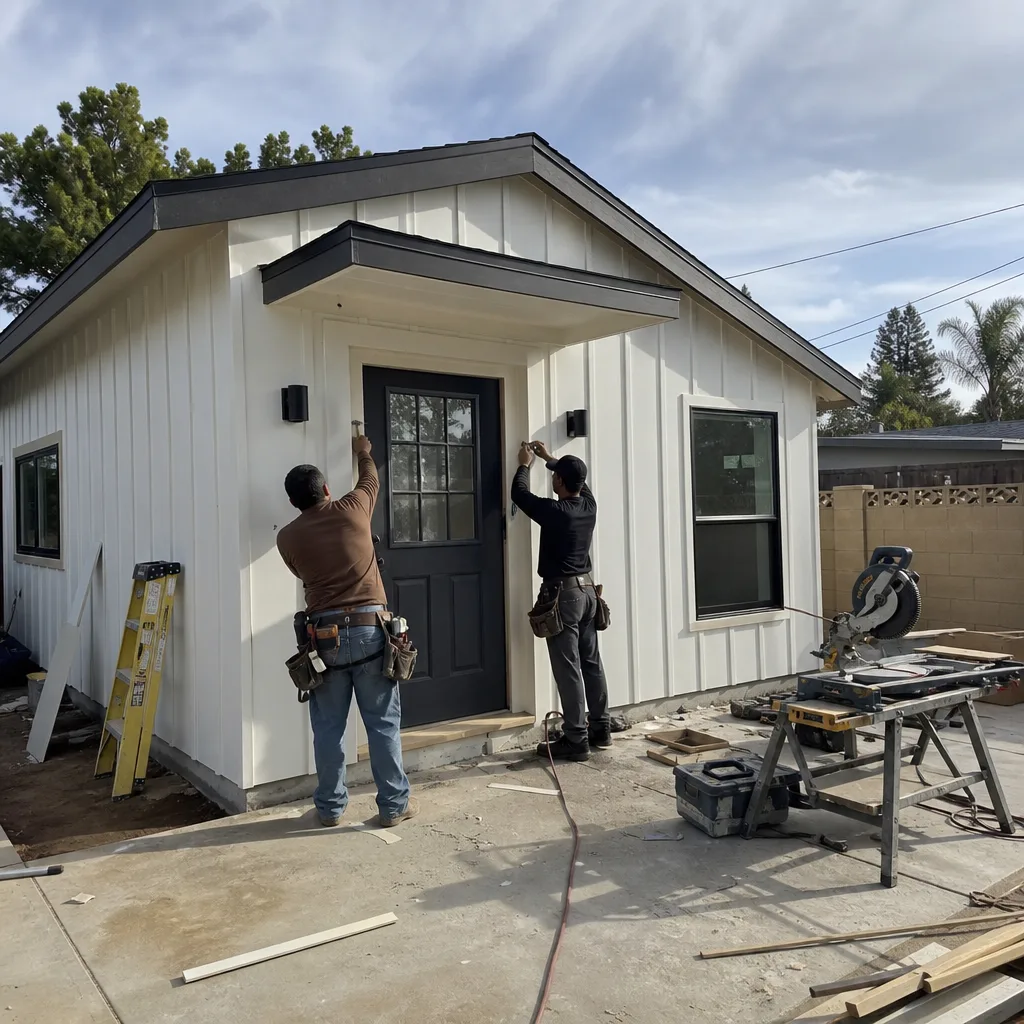
Simi Valley is not a uniform market. The city covers roughly 42 square miles, and lot conditions, HOA rules, and infrastructure quality vary considerably between neighborhoods. These are the six factors that move the number most on actual projects here.
- Lot topography and soil conditions. Flat lots in the Knolls, Country Club Estates, and central Simi Valley typically support standard slab foundations and straightforward utility connections. Sloped lots in Wood Ranch, Santa Susana Knolls, and Bridle Path often require engineered grade beams, additional grading, or retaining walls, each of which adds cost before framing even starts. A soils report, if required, costs $2,500-$4,500 but protects you from discovering expansive clay mid-pour.
- Square footage and unit height. Simi Valley’s ADU ordinance (aligned with state law as of 2025) allows detached ADUs up to 1,200 sq ft. But cost does not scale linearly, a 1,000 sq ft unit is not twice the cost of a 500 sq ft unit. Kitchens, bathrooms, and MEP systems have a base cost regardless of size. Going from 500 to 750 sq ft adds mostly living space, which is relatively cheap to build. Going from 750 to 1,200 sq ft starts adding HVAC load, additional electrical circuits, and sometimes a second bathroom.
- Prefab vs. site-built construction. Modular systems from brands like Abodu, Cover, and Dvele offer predictable factory costs and compressed site timelines, which matters in Simi Valley where framing labor is tight in the summer and fall schedule books up. The tradeoff is that prefab modules require precise site prep, including exact foundation dimensions and utility stub-out locations, which means the design-build coordination has to be tighter, not looser. Ellery specifies and coordinates these systems within the same single contract, so neither the module vendor nor the site crew is working from different drawings.
- HOA restrictions. Wood Ranch HOA and certain planned-unit-development zones in west Simi Valley require architectural review before permit submittal. That review can restrict exterior materials, roof pitch, or window placement in ways that add design time and sometimes require more expensive cladding (concrete tile over comp shingle, for example). Budget an additional $2,000-$5,000 in design time and HOA submittal fees if your lot carries HOA covenants.
- Finish level and specification choices. The permit set and framing cost is largely fixed once the design is locked. Interior finishes are where clients have the most control. LVP flooring versus engineered hardwood, IKEA cabinet boxes versus semi-custom, basic tile versus large-format porcelain – those choices alone can swing the interior finishes line by $20,000-$35,000 on a 750 sq ft unit.
- Utility connection distance and panel capacity. If the main house electrical panel is at the front of the property and the proposed ADU site is at the rear, the trenching run for a new sub-panel circuit can add meaningful labor and conduit cost. Simi Valley has a high proportion of 1970s-era single-family homes with 100-amp service, and SCE (Southern California Edison) is the utility here – panel upgrade timelines through SCE’s interconnection queue have averaged 8-14 weeks in this market. That’s not a delay you discover after framing. It’s one of the first things we flag on the site assessment.
Simi Valley-Specific Permitting and Code Details You Should Know
Simi Valley processes ADU permits through the Community Development Department at 2929 Tapo Canyon Road. As of 2026, the city uses a ministerial approval process for ADUs that conform to state law – no public hearings, no discretionary review. That’s the good news. The less simple part is getting the permit set complete enough that the city approves it on the first or second review cycle, rather than bouncing it back with a corrections list.
Simi Valley’s plan checkers consistently flag three issues on detached ADU submittals: incomplete Title 24 energy calculations, missing fire sprinkler documentation (required when the main dwelling has sprinklers), and setback non-compliance on interior side yards. The standard setback for a new detached ADU in Simi Valley is 4 feet from side and rear property lines under state law, but if your lot is in a hillside or ridgeline overlay zone, additional distance requirements may apply. A survey, not just a hand-drawn sketch, is usually required to document conformance.
Under Simi Valley’s current fee schedule, permit fees are calculated on the assessed construction valuation, not a flat per-square-foot rate. That means the finish level you choose affects not just construction cost but also what you pay in permit fees. A project valued at $280,000 will carry higher permit fees than the same footprint valued at $195,000 with entry-level finishes.
Ellery submits complete permit sets, with all required sheets, energy calculations, and supporting documentation, as a package. Since 2015, we’ve built familiarity with Simi Valley’s plan check cycle and know what the department looks for. That doesn’t mean instant approval, but it does mean the permit set we submit is not missing pieces that cause a 6-week corrections round-trip.
Prefab and Modular ADU Options for Simi Valley

Prefab ADUs get talked about as a shortcut to lower cost. The reality is more specific than that: they can lower construction cost and timeline, but only when the site and utility conditions are already suitable and the permitting is handled correctly.
For Simi Valley specifically, a few prefab systems make sense on the right lot:
- Abodu and Cover are panelized systems that work well on flat lots with straightforward utility access. Both require precise foundation work and utility stub-outs to match their factory dimensions, which is why the design-build coordination has to be centralized.
- Dvele and Plant Prefab are higher-specification modular systems that pair with more contemporary architectural programs. They carry higher base unit costs but typically arrive on-site with most MEP rough-in complete, which compresses the on-site labor schedule.
- Mighty Buildings and Boxabl are worth evaluating for smaller footprints (under 600 sq ft), where site-built construction has less cost advantage over factory production.
- Tuff Shed pre-engineered structures can work for accessory storage-type ADUs but require careful review of Simi Valley’s habitability standards before being proposed as a living unit.
James Hardie fiber cement remains our standard exterior cladding specification for Simi Valley regardless of construction method. It holds up against the Santa Ana wind events that push ember exposure through the fall months, and it meets the ignition-resistant construction requirements in the fire hazard severity zones that cover parts of east Simi Valley near Rocky Peak.
Ellery coordinates all of these systems under the same single contract. When a client is weighing prefab against site-built, we put the numbers side by side – same lot, same program, both methods – so the decision is based on real figures, not brochure claims.
How to Save on a New Detached ADU in Simi Valley
Cost reduction on an ADU project is mostly about decisions made before construction starts. The following approaches have a measurable effect on the final number in the Simi Valley market.
- Size the unit to your actual use case, not the maximum allowed. State law allows up to 1,200 sq ft for a new detached ADU. But a 650 sq ft one-bedroom designed well functions better than an 1,100 sq ft unit that’s over-sized for rental income or in-law use. Smaller footprints reduce foundation, framing, MEP, and finish costs proportionally. On a typical Simi Valley lot, going from 900 sq ft to 650 sq ft can save $30,000-$60,000.
- Choose a simple rectangular footprint. L-shapes, setbacks, and bump-outs add complexity to framing, roofing, and waterproofing. A clean rectangle on a flat Simi Valley lot is the lowest-cost structural form. You can add architectural interest through window placement, exterior cladding, and landscape without adding cost to the structure.
- Separate the finishes decision from the structure decision. Lock in the footprint and structural specification first, then make finish choices as a second budget step. Clients who conflate the two often either over-specify at design and then cut corners during construction, or under-specify and wish they’d budgeted more for finishes. Keeping the decisions sequential gives you a clearer picture of where the money goes.
- Avoid mid-project scope changes. This sounds obvious, but it’s the single most common source of cost overruns we see on projects that came to us as second opinions after another firm’s project derailed. A change order mid-frame, after lumber is cut and walls are up, costs two to four times what the same change would cost at the design stage. Under Haven Standard Clause 5, the scope is locked at signing. If you want to change something, we price it in writing before proceeding – no verbal approvals, no surprise invoices.
- Get a second opinion on any existing estimate. If you’ve already received a written quote from another design-build firm or general contractor, Ellery offers a free second opinion on that document. We’ll tell you what’s included, what’s likely missing, and whether the number reflects current Simi Valley subcontractor pricing. No obligation. Call (820) 444-6584 and ask for the second-opinion review.
- Time the permit submittal to avoid peak review queues. Simi Valley’s plan check workload has historically been heaviest from March through July. Submitting in late fall or early winter can reduce first-review turnaround from 8-10 weeks to 5-6 weeks, which compresses the overall project timeline and reduces carrying costs for clients who are financing the project.
Return on Investment: What a New Detached ADU Is Worth in Simi Valley
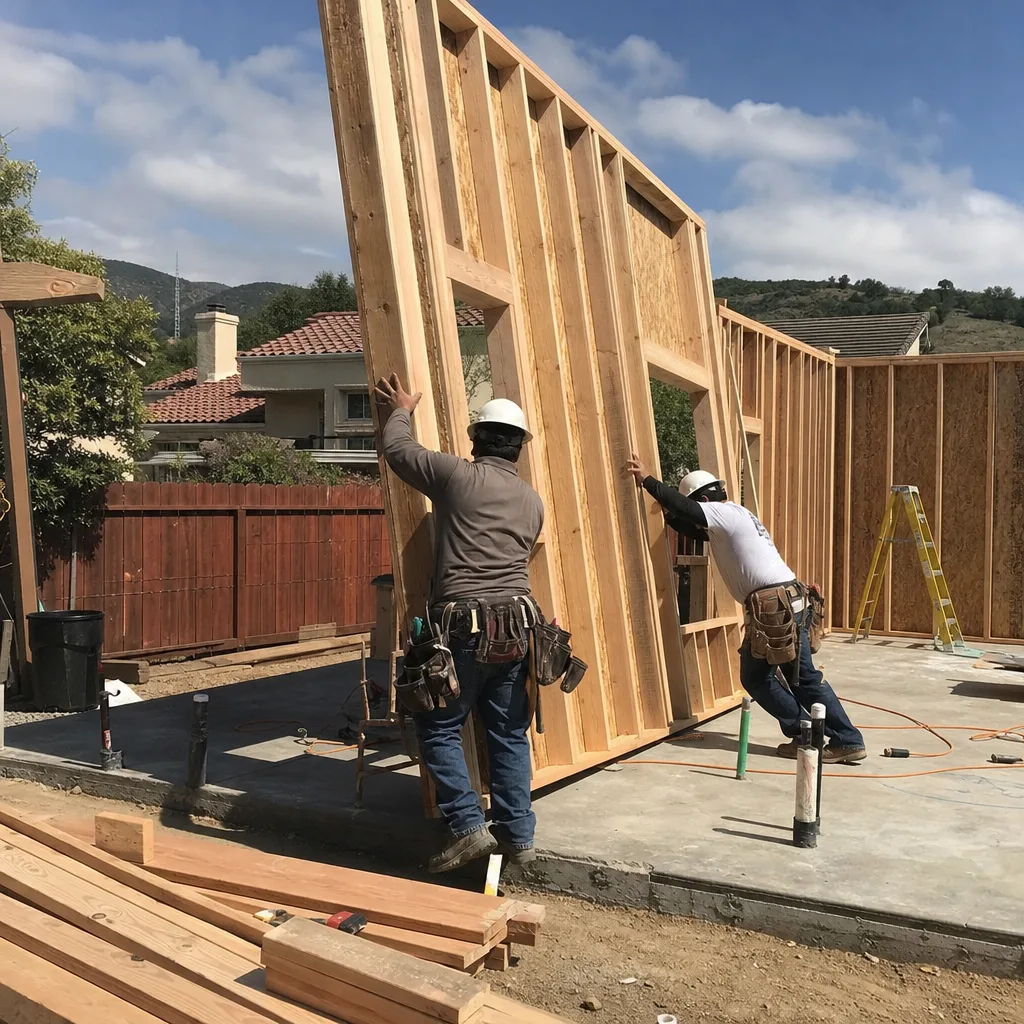
This page is about cost, not valuation, but the two questions are inseparable for the homeowners who contact us. So here are the numbers as they stand in Simi Valley in 2026.
Market rents for a detached one-bedroom ADU in Simi Valley currently range from $1,800 to $2,600 per month, depending on finish level, location within the city, and whether the unit has a separate entrance and parking. Units in Wood Ranch and the newer planned communities on the east side of Simi Valley rent at the higher end. Units in the Tapo Canyon and First Street corridor rent at the lower end.
At $2,100/month gross rent on a $265,000 all-in project cost, you’re looking at a gross yield of roughly 9.5% annually before vacancy, maintenance, and tax. That’s not a number you’ll get from a savings account or a rental in the San Fernando Valley, where purchase prices are substantially higher for the same rent. And that calculation doesn’t account for the appraised value the ADU adds to the primary residence.
For homeowners in Simi Valley who bought between 2015 and 2021 and are now sitting on equity, a detached ADU is one of the few ways to extract a return on that equity without selling and triggering a tax event. That’s the investment calculus most of our clients are working through before they call.
For more detail on how the project works from first meeting to final inspection, New Detached ADU in Simi Valley covers the full scope of what Ellery manages under a single contract.
FAQs – New Detached ADU Cost in Simi Valley
What is the average cost per square foot for a new detached ADU in Simi Valley?
In Simi Valley in 2026, new detached ADU construction runs between $290 and $420 per square foot all-in, including design, permits, and construction. Entry-level specifications on a flat lot with simple utility connections land at the low end. Premium finishes, hillside lots, or prefab systems from brands like Dvele or Cover land at the higher end. Per-square-foot averages are useful for rough budgeting but can mislead on small units, where kitchen and bathroom costs are fixed regardless of square footage. For a written number specific to your lot, call (820) 444-6584 – every Ellery quote is produced in writing before any work starts.
How long does it take to permit and build a new detached ADU in Simi Valley?
From design kick-off to certificate of occupancy, most new detached ADU projects in Simi Valley take 10 to 18 months. Simi Valley’s plan check runs 6-10 weeks on a first submittal. Construction, depending on site complexity and method (site-built vs. prefab), runs 5-9 months after permit issuance. Prefab and panelized systems from brands like Abodu or Mighty Buildings can compress the construction phase by 6-10 weeks on suitable lots. The design and permit phase is largely fixed, but submitting a complete permit set the first time (rather than a set that comes back with corrections) saves 4-8 weeks in practice.
Do Simi Valley HOAs allow new detached ADUs?
State law (AB 2221, effective 2023) limits HOA authority to restrict ADUs. An HOA in Simi Valley cannot prohibit a detached ADU outright, but it can apply reasonable architectural standards to exterior appearance – materials, color, and roof pitch in particular. Wood Ranch HOA, for example, requires an architectural review submittal before permit application and may require concrete tile roofing to match the main residence. That review adds $2,000-$5,000 in design and submittal costs and typically runs 4-8 weeks. If your lot carries HOA covenants, Ellery identifies the applicable rules during site assessment and prices the HOA coordination into the written quote.
Is it cheaper to build a new detached ADU or convert a garage in Simi Valley?
Garage conversions in Simi Valley typically run $95,000 to $180,000 all-in, compared to $180,000-$420,000 for a new detached unit. If your property has an attached or detached garage in sound structural condition, a conversion will almost always cost less than new construction. The tradeoff is that a converted garage is constrained by the existing footprint, ceiling height, and location on the lot, and it eliminates the parking space. A new detached ADU gives you full control over size, placement, and program at higher cost. If you’re weighing both paths, Ellery can put a written estimate on each option for your specific lot so the comparison is apples to apples.
Does a new detached ADU require a soils report in Simi Valley?
Not always, but more often than most homeowners expect. Simi Valley’s Building Division requires a soils report (geotechnical investigation) when the lot has a slope exceeding a certain grade, shows evidence of expansive soil conditions, or is located in a hillside overlay zone. Wood Ranch, Santa Susana Knolls, and Tierra Rejada corridor lots frequently trigger this requirement. A soils report costs $2,500-$4,500 and typically takes 3-4 weeks to complete. Ellery identifies whether a soils report is likely required during the initial site assessment, so it’s included in the first written quote rather than surfacing as an additional cost after design is underway.
What financing options are available for a new detached ADU in Simi Valley?
The most common financing tools for Simi Valley homeowners are cash-out refinance, home equity line of credit (HELOC), and construction-to-permanent loans. California’s ADU Grant Program (administered through CalHFA) has provided up to $40,000 in forgivable grants to owner-occupants who meet income eligibility thresholds – availability fluctuates, so confirm current program status directly with CalHFA. Some lenders in the Ventura County market now offer ADU-specific construction loans that underwrite the post-completion appraised value of the property including the ADU, which can increase the available loan amount relative to a standard HELOC. Ellery doesn’t provide financing advice, but a written project cost document from us gives any lender the specific number they need to structure the loan – which is more useful to a bank than a verbal estimate.
Key Takeaways
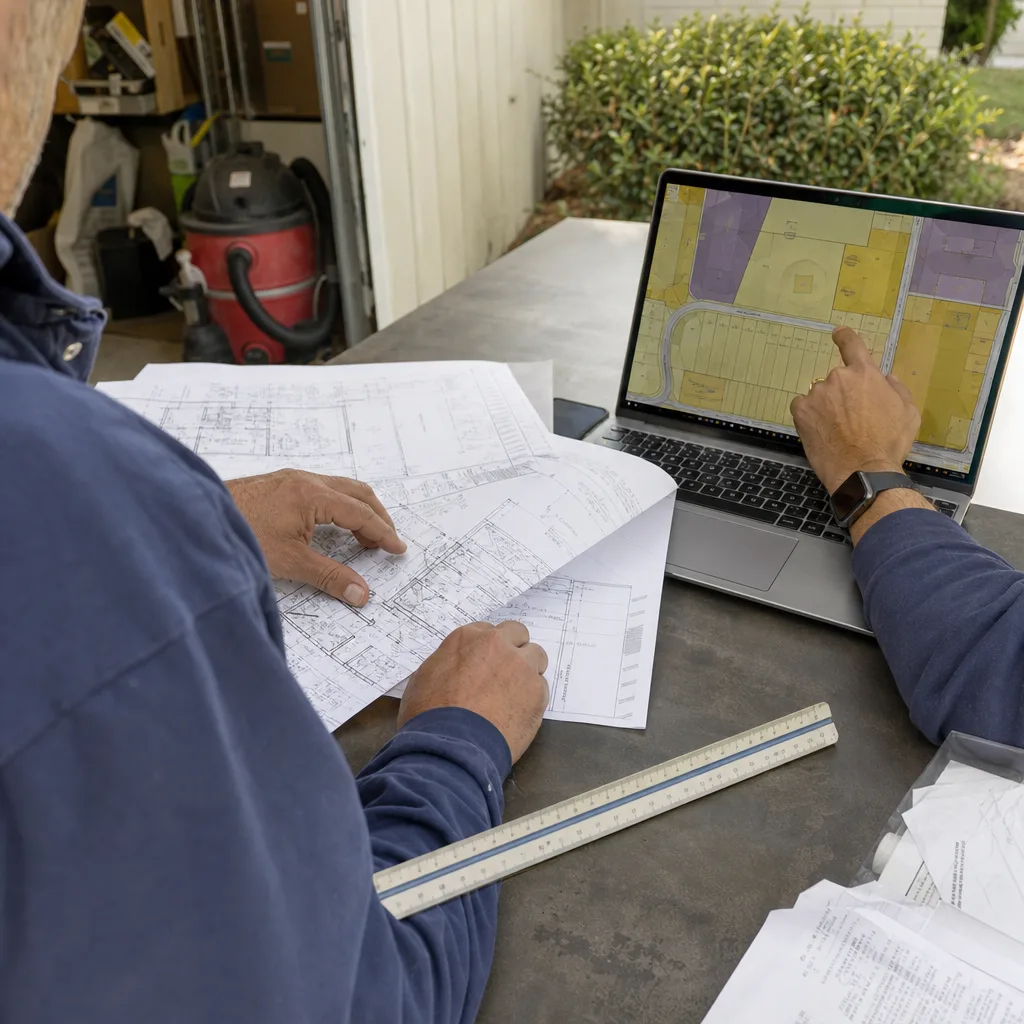
- New detached ADUs in Simi Valley cost $180,000 to $420,000 all-in; most projects land between $220,000 and $330,000.
- Per-square-foot cost runs $290-$420 in 2026, with site conditions and finish level as the biggest variables.
- Hillside lots in Wood Ranch, Santa Susana Knolls, and Bridle Path regularly add $20,000-$50,000 in foundation and utility costs over flat-lot projects.
- Simi Valley permit timelines average 6-10 weeks for a first-round approval on a complete submittal; incomplete sets add 4-8 weeks to that.
- Prefab systems (Abodu, Cover, Dvele, Mighty Buildings, Plant Prefab) are viable in Simi Valley on suitable lots and can compress construction by 6-10 weeks.
- HOAs in Wood Ranch and similar planned communities cannot block an ADU but can impose architectural standards that add cost and time to the design phase.
- Every Ellery quote is written before any work starts (Haven Standard Clause 1). The number you sign is the number we build to.
- Nadia Ellery reviews every Simi Valley quote personally before it goes out.
Ready to See a Written Number for Your Simi Valley Lot?
Ellery ADU Studio has designed, permitted, and built more than 900 ADUs since 2015, every one with a written price before work started. For Simi Valley homeowners, that means a document – not a ballpark, not a range scrawled on a card – showing exactly what the project costs, line by line, before you commit to anything.
If you already have a written estimate from another firm, ask about our Free Second Opinion. We’ll review what you’ve been quoted, tell you what’s in it, what’s missing, and whether the number reflects actual Simi Valley subcontractor rates in 2026. No fee, no obligation.
Nadia Ellery and the Ellery ADU Studio team serve Simi Valley and the surrounding Ventura County market. A live person answers calls around the clock. Call (820) 444-6584 to get your written quote started, or to ask a specific question about your lot before you’re ready to commit to anything. That’s what we’re here for.
You can also learn more about how the full project process works, from site assessment through final inspection, on our home page.
Pricing reflects the Simi Valley market as of 2026. Ellery ADU Studio Simi Valley offers free estimates – call (820) 444-6584.
Written by Nadia Ellery, Owner at Ellery ADU Studio, serving Simi Valley since 2015.
What Our Customers Say
"They walked us through setbacks and utility capacity before we paid anything, and told us one of our two options was not going to get approved."
- Mireille T."Detached unit in the back garden. Good design, good build quality, and the cost changes were documented and agreed in advance."
- Stefan B."The rental income has covered the payment since the second month. They were realistic about the numbers rather than optimistic."
- Odette N.