
Last updated September 25, 2026
How to Hire a ADU Contractor in Simi Valley: A Step-by-Step Guide
The most expensive ADU mistake in Simi Valley isn’t hiring the wrong contractor. It’s hiring a designer and a contractor under two separate contracts, then discovering the drawings the designer produced can’t be built at the price the contractor quoted. We’ve seen this gap derail projects by eight months and $40,000. This guide-along with our more guides & resources-walks you through the hiring decision in the order that actually protects your investment: contract structure first, credentials second, price last.
Quick Answer
Hiring an ADU contractor in Simi Valley means finding a single design-build entity with a B-General Building license, verified CSLB standing, and a written contract that locks scope, price, and permit responsibility before any work begins. The firm should show you a completed permit set from a Simi Valley project, not a rendering, and quote a dollar range in writing before you pay a design deposit.
Table of Contents

- Design-Build vs. Design-Bid-Build: The Contract Structure That Saves or Costs You Thousands
- How to Verify a California Contractor License for ADU Work
- What a Real Permit Set Looks Like (Versus a Rendering That Wins Deposits)
- Five Contract Clauses That Protect Your ADU Investment
- Interview Questions That Reveal Real Simi Valley Permit Experience
- How ADU Pricing Works in Simi Valley: What to Expect
- Prefab and Modular ADUs: When They Fit Simi Valley Lots
- Common Mistakes to Avoid
- When to Call a Professional
- Frequently Asked Questions
- The Bottom Line
Design-Build vs. Design-Bid-Build: The Contract Structure That Saves or Costs You Thousands
Most guides start with “get three bids.” That advice assumes you’ve already got buildable drawings. In ADU construction, you almost never do. The standard path splits the work: an architect or designer produces plans, then you bid those plans to contractors. This is design-bid-build, and it’s where most Simi Valley ADU projects fracture.
Here’s the failure mode we see repeatedly. A homeowner pays $8,000-$15,000 for a design package. The drawings look professional. Then three contractors bid. One bid comes in 40% over the designer’s informal estimate. Another contractor notes the foundation detail doesn’t match Simi Valley’s expansive soil conditions and needs redesign. The third spots that the electrical service upgrade wasn’t coordinated with SCE’s timeline. The designer says the contractor is padding. The contractor says the designer never built anything. The homeowner pays for redesign, or picks the lowest bid and discovers change orders in month three.
Design-build eliminates this gap. One entity produces the drawings and builds from them. If the detail doesn’t work in the field, the same team fixes it. No finger-pointing, no redesign fees, no “that wasn’t in my scope.”
At Ellery ADU Studio, we operate under this model. ADU Design & Permitting in Simi Valley and construction sit under one contract at one written price, governed by The Haven Standard. When we specify a foundation detail, we’re the ones pouring it. When we draw the electrical panel location, we’re the ones running conduit to it.
Three questions reveal which structure a firm actually uses:
- Who holds the contract for both design and construction? If the answer is two different companies, you’re in design-bid-build territory.
- Who pays for redesign if the city requests plan corrections during permit review? In design-bid-build, this often falls to the homeowner.
- Is the price quoted before design begins, or only after drawings are complete? A design-build firm can price from a site visit and program; a designer alone cannot.
The liability shift matters. In design-bid-build, liability sits with whoever last touched the documents. In design-build, liability sits with the single entity that signed your contract. That’s the difference between a six-month dispute and a same-week fix.
How to Verify a California Contractor License for ADU Work
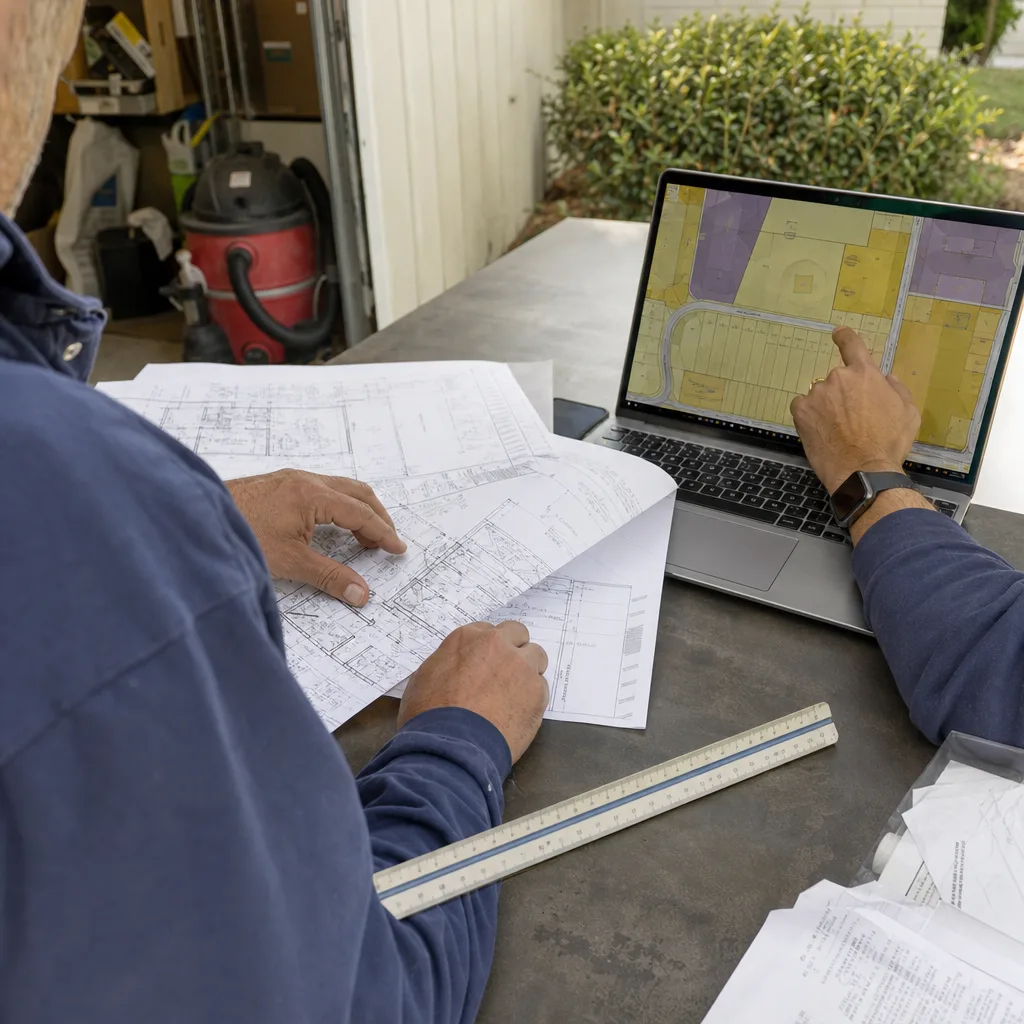
Every legitimate ADU contractor in Simi Valley must carry a California State License Board (CSLB) license. Verification takes two minutes and protects you from unlicensed operators who can’t pull permits or carry the required bond.
Here’s the exact process:
- Visit cslb.ca.gov and click “Check a License.”
- Enter the business name or six- or seven-digit license number.
- Confirm the status reads “Active.” Suspended or expired licenses cannot legally contract for work over $500.
- Verify the classification. For ADU construction, you want B-General Building. This classification authorizes construction of structures, including ADUs, garage conversions, and detached units.
- Check the bond and workers’ compensation insurance status. Both must show current.
The B-General Building classification covers framing, concrete, roofing, and the complete structure. What it does not cover: specialized trades performed standalone. If a contractor proposes to subcontract all electrical, plumbing, and HVAC, that’s normal. If they propose to perform electrical work themselves without a C-10 Electrical license, that’s a red flag. The B license allows supervision of these trades, not direct performance without the proper specialty classification.
Ask to see the license card or screenshot the CSLB page yourself. A firm that hesitates has something to hide. At Ellery ADU Studio, our license number appears on every page, every proposal, and every permit application we file in Simi Valley.
Also verify local business registration. The City of Simi Valley requires business licenses for contractors operating within city limits. This is separate from state licensure and confirms the firm has a local tax presence, not just a mailing address.
What a Real Permit Set Looks Like (Versus a Rendering That Wins Deposits)
We’ve reviewed hundreds of “design packages” that persuaded homeowners to pay deposits. Many are 3D renderings with a site plan. None of them are permit sets. The difference determines whether your project moves to construction or stalls in city review for months.
A legitimate Simi Valley ADU permit set contains:
- Cover sheet with project address, APN, and scope summary
- Site plan showing existing and proposed structures, setbacks, and utility locations
- Floor plans with dimensions, door and window schedules, and fixture locations
- Elevations showing exterior materials, heights, and roof pitches
- Foundation plan with details for Simi Valley’s expansive clay soils
- Framing plans with structural member sizes and connections
- MEP plans (mechanical, electrical, plumbing) with load calculations
- Title 24 energy compliance documentation
- Structural calculations, wet-stamped by a California-licensed engineer
- Water and sewer connection details, coordinated with Ventura County Waterworks District or Golden State Water as applicable
A rendering package contains: pretty pictures. Maybe a floor plan without dimensions. No structural details. No energy compliance. No coordination with local utility providers.
The risk is specific. Some firms use preliminary designs to collect deposits, then discover “unexpected complications” that require additional design fees. Others outsource permit drawings to drafters who’ve never submitted to Simi Valley’s Community Development Department and don’t know the city’s specific checklist requirements. Our ADU Design & Permitting Maintenance Checklist for Simi Valley Homeowners covers what a proper permit set must include.
Ask to see a redacted permit set from a completed Simi Valley project. Not a rendering. Not a concept. The actual sheets that received plan-check approval. If a firm can’t produce this, they haven’t successfully permitted in your jurisdiction.
At Ellery ADU Studio, our permit set is the core product. We’ve submitted over 900 ADU permit sets since 2015, each with a written price before work started and a documented photo record when complete. The permit set isn’t a sales tool. It’s the document that gets your project built.
Five Contract Clauses That Protect Your ADU Investment

The contract is where most homeowners discover, too late, what they didn’t buy. These five clauses separate a protectable agreement from a vague promise.
1. Written Scope of Work, Itemized by Phase
The scope should list every phase: demolition, foundation, framing, MEP rough, insulation, drywall, finishes, final inspection. Each phase should reference the permit drawing sheet it corresponds to. Vague language like “complete ADU construction” invites dispute. Under Haven Standard Clause 5 (No Surprises), our scope is locked at signing; no door-side upsells, no scope creep.
2. Permit-Pull Responsibility, with Timeline
The contract must state who files the permit application, who attends plan-check meetings, and who pays for corrections. Simi Valley’s Community Development Department typically completes initial plan check in 4-6 weeks for ADUs, but corrections can add cycles if the submitter doesn’t understand local preferences. The contract should name the responsible party and a maximum timeline before the price adjusts.
3. Allowance Itemization with Floor and Ceiling
Allowances cover selections not yet chosen: flooring, countertops, fixtures, appliances. A legitimate contract lists each allowance with a dollar range and specifies what happens at overage or savings. “Tile allowance: $3,500-$4,200. Client selects from supplier catalog; overage billed at cost plus 15% markup, savings credited to final invoice.” Without this, a $2,000 tile upgrade becomes a $6,000 surprise.
4. Change-Order Threshold with Written Authorization
The contract should require written authorization for any change over a defined threshold, typically $500 or 2% of contract value, whichever is less. Verbal changes should not be billable. This prevents the “while we’re here” conversation that adds 15% to project cost.
5. Lien Waiver Schedule Tied to Progress Payments
California law allows mechanics liens from any unpaid subcontractor or supplier, even if you paid the general contractor in full. The contract should specify that you receive conditional lien waivers from all tiers before each progress payment, and unconditional waivers within 10 days of final payment. This is non-negotiable on a six-figure project.
Review these clauses before you sign, not after. A firm that resists written specificity has something to gain from ambiguity.
Interview Questions That Reveal Real Simi Valley Permit Experience
Every contractor claims local experience. These questions separate firms who’ve actually permitted in Simi Valley from those learning your jurisdiction on your budget.
- “Walk me through the last Simi Valley ADU you permitted. What did plan check flag, and how did you resolve it?” A firm with genuine experience can describe specific corrections: setback verification on hillside lots, fire department access for detached units over 500 square feet, or Ventura County Air Pollution Control District coordination for generator installations. Vague answers mean they haven’t been through the cycle.
- “How does Simi Valley’s hillside ordinance affect this specific lot?” Much of Simi Valley sits on sloped terrain with special grading and drainage requirements. A qualified firm knows whether your property triggers hillside development standards and how that impacts foundation design and retaining wall requirements.
- “What’s the current Simi Valley ADU fee schedule, and what’s your typical total permit cost?” As of recent projects, Simi Valley ADU permit fees typically run $4,500-$8,000 depending on unit size and utility connections. A firm quoting significantly more or less hasn’t checked current fee schedules.
- “Do you coordinate with Ventura County Waterworks District or Golden State Water for service upgrades?” Water service in Simi Valley splits between providers. The wrong answer here means delayed utility connections and potential redesign.
- “Show me the permit set from that project.” We’ve covered this above, but it bears repeating. Production of actual documents is the only proof.
- “What’s your typical timeline from signed contract to certificate of occupancy in Simi Valley?” A firm quoting under 8 months for a ground-up detached ADU is optimistic or inexperienced. A realistic range is 10-14 months, with design and permitting consuming 4-6 months and construction 6-8 months.
The quality of answers matters more than the answers themselves. Specificity, named documents, and acknowledged complexity indicate experience. Smooth generalities indicate sales training.
How ADU Pricing Works in Simi Valley: What to Expect
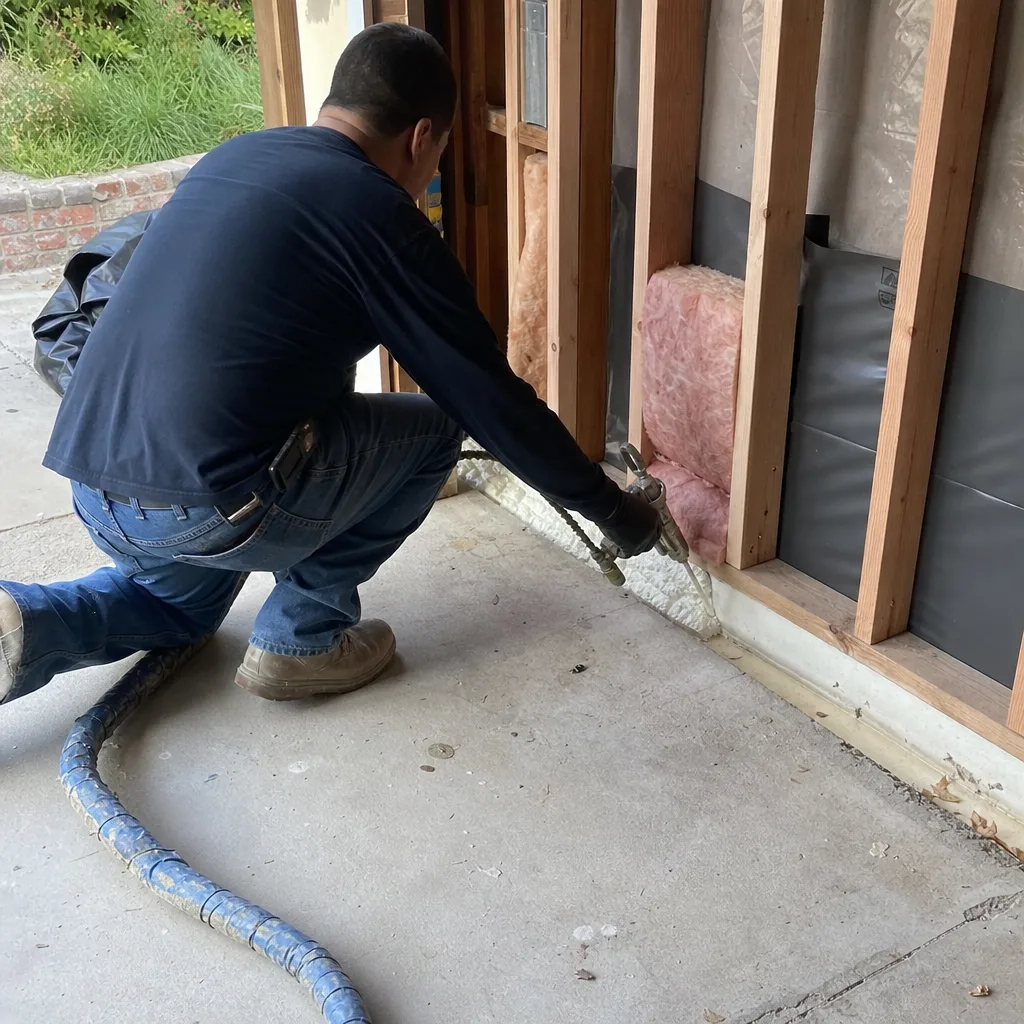
ADU pricing in Simi Valley follows project type, not square footage alone. For a detailed breakdown, see our ADU Cost Breakdown: The Simi Valley Homeowner’s Reference for 2026. Site conditions, utility access, and foundation requirements create more variation than the structure itself. Here’s what we’ve observed in this market:
| Project Type | Typical All-In Range (Design through Final Inspection) | Primary Cost Drivers |
|---|---|---|
| Garage Conversion ADU | $95,000-$165,000 | Existing slab condition, electrical service capacity, roof structure |
| Junior ADU / Interior Conversion | $75,000-$125,000 | Separate entrance requirement, kitchenette scope, fire separation |
| New Detached ADU (400-800 sq ft) | $180,000-$320,000 | Foundation type, utility trenching distance, roofing material |
| New Detached ADU (800-1,200 sq ft) | $280,000-$450,000 | Structural complexity, appliance package, exterior finish selection |
These ranges include design, permitting, construction, and standard finishes. They do not include unusual site conditions: extensive grading, septic system upgrades, or long utility trench runs.
Simi Valley’s climate affects pricing in specific ways; see our Seasonal ADU Care for Simi Valley: Year-Round Homeowner’s Guide for maintenance considerations. The hot, dry summers and occasional Santa Ana winds drive energy code requirements for insulation and HVAC sizing. The expansive clay soils common in the valley require deeper footings or post-tension slabs in some areas, adding $8,000-$15,000 to foundation costs compared to coastal markets. Fire hazard zones in nearby hillside areas may trigger additional exterior material requirements.
Under Haven Standard Clause 1, every Ellery ADU Studio project receives a written price before any work begins. Not an estimate. Not a range that narrows later. A single number, itemized by phase, with allowance floors and ceilings. The words “call for a quote” do not appear on our site because they don’t appear in our process.
We also offer a Free Second Opinion on any written estimate already in hand. Bring us another firm’s proposal and we’ll review it for scope gaps, allowance risks, and permit responsibility allocation at no charge.
Prefab and Modular ADUs: When They Fit Simi Valley Lots
Prefab and modular ADUs have matured significantly. Systems from Abodu, Cover, and Dvele now offer permitted, engineered units with predictable timelines and factory-controlled quality. They’re not right for every Simi Valley lot, but they fit more situations than most homeowners assume.
The advantages are specific: factory construction compresses the build timeline by 30-50%, weather delays disappear, and quality control is systematic rather than crew-dependent. For homeowners on flat lots with straightforward utility access, a prefab unit can reduce time-to-rental by months.
The constraints are equally specific. Crane access requires clear staging area and overhead clearance. Foundation requirements vary by manufacturer: some use stem walls, others use post-tension slabs, others use pier systems. The foundation must be designed for Simi Valley soils, not generic California conditions. Utility connections must be stubbed precisely; factory tolerances don’t forgive field improvisation.
Ellery ADU Studio specifies and coordinates prefab and modular systems from Abodu, Cover, Dvele, Mighty Buildings, and other manufacturers within our single-contract model. We handle site preparation, foundation design, utility coordination, and module placement as one scope with one written price. The manufacturer warranty covers the module; our 365-Day Done Right Promise covers the integration.
For Simi Valley lots with narrow access, steep driveways, or mature tree canopies, site-built may remain preferable. We evaluate this in initial site analysis, not after you’ve committed to a manufacturer.
Common Mistakes to Avoid
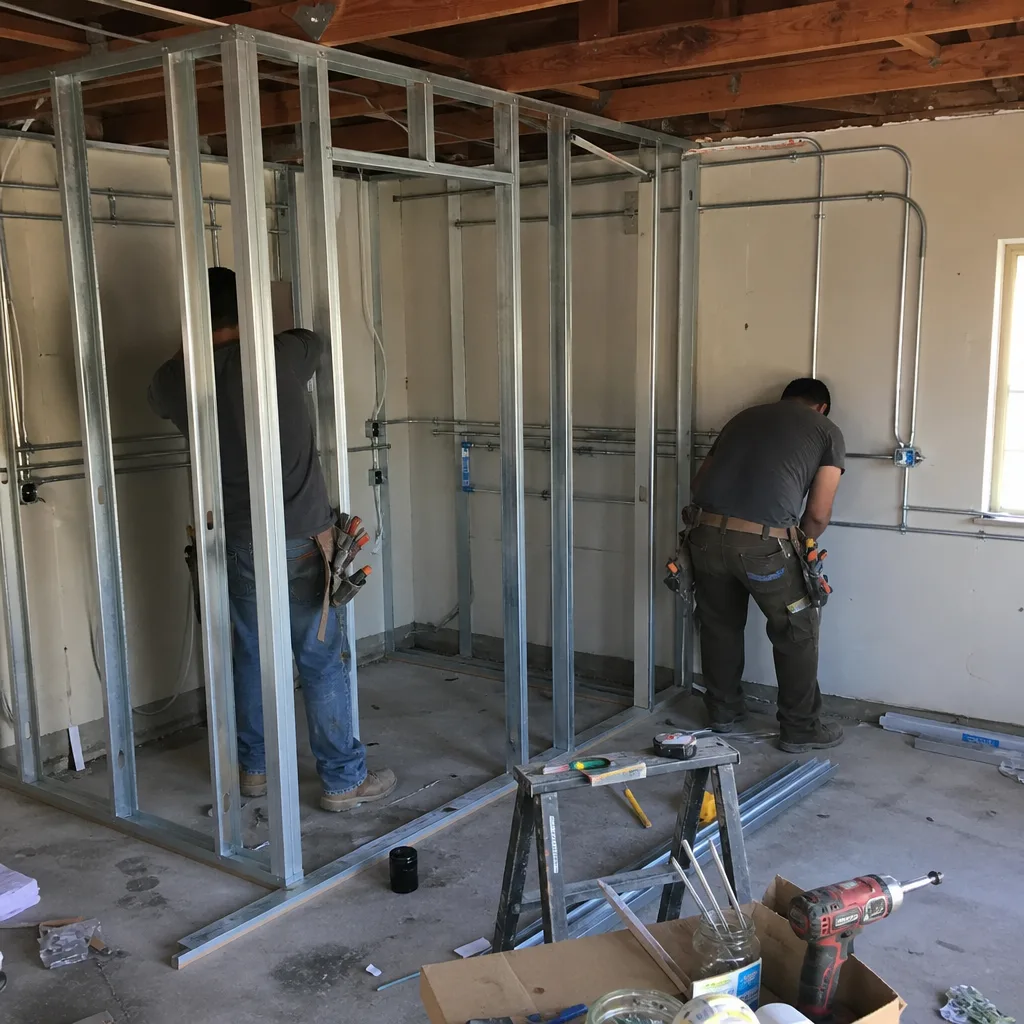
- Paying a design deposit before verifying permit capability. Some firms produce beautiful drawings that never receive plan-check approval. Verify completed permits before you pay for design.
- Accepting a “preliminary estimate” that isn’t binding. An estimate that says “subject to final drawings” isn’t a price. It’s a guess. Under Haven Standard Clause 1, we provide written pricing before work begins, always.
- Ignoring utility coordination until construction starts. SCE service upgrades and water main extensions can take 3-6 months. Starting this process after foundation pour delays project completion by half a year.
- Hiring based on lowest bid without scope comparison. A bid 20% below others usually excludes something: permit fees, utility connections, or finish allowances. Itemize before you compare.
- Assuming a B license covers all trades performed directly. Verify that electrical, plumbing, and HVAC work will be performed by appropriately licensed C-class contractors, not supervised by a B licensee without proper classification.
- Neglecting lien waiver documentation. California’s mechanics lien laws protect subcontractors over homeowners. Without documented waivers, you can pay in full and still face liens from unpaid suppliers.
- Treating ADU construction as a scaled-up renovation. ADUs are new construction with full permit, inspection, and code compliance requirements. The contractor who remodeled your kitchen profitably may lack the documentation discipline for a permitted accessory dwelling unit.
When to Call a Professional
Call a design-build professional when you’re serious about building, not when you’ve finished planning. Early involvement prevents the most expensive errors: lot coverage miscalculations, setback violations, and utility capacity surprises. In Simi Valley’s varied terrain, a site visit reveals conditions no satellite image captures.
Specific scenarios that warrant immediate consultation: your lot is hillside or sloped; your main electrical panel is older than 1990; your property shares a driveway or has access constraints; you’re considering a garage conversion and don’t know if the slab meets current code; you’ve received a design proposal and want a second opinion on buildability and pricing.
Ellery ADU Studio Simi Valley offers free estimates in Simi Valley. Call (820) 444-6584 to schedule a site evaluation. We’ll bring a completed permit set from a comparable project, verify your lot conditions against current code, and provide a written price before any work begins. A live person answers calls 24/7.
Frequently Asked Questions
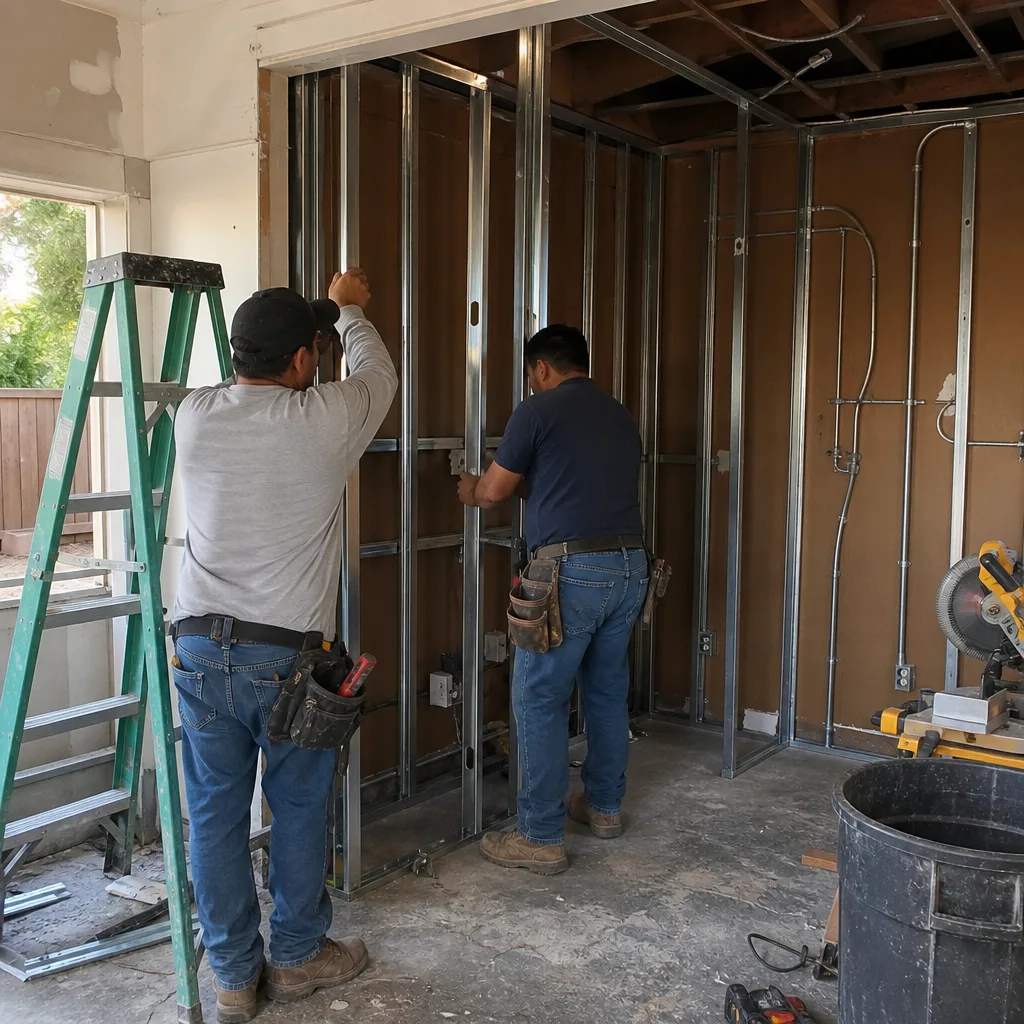
Garage conversion ADUs in Simi Valley typically run $95,000-$165,000 all-in, from drawings through final inspection. New detached ADUs range from $180,000 for compact units to $450,000 for larger structures with upgraded finishes. Site conditions, foundation requirements, and utility access drive variation more than square footage alone. Call (820) 444-6584 for an exact quote on your specific lot - estimates are free and written before any work begins under Haven Standard Clause 1.
Yes. ADU construction in California requires a B-General Building license from the CSLB for the general contractor, plus C-10 Electrical, C-36 Plumbing, and C-20 Warm-Air Heating licenses for any trade work performed directly rather than subcontracted. Verify all licenses at cslb.ca.gov. A B license allows supervision of specialty trades but does not authorize direct electrical or plumbing work without the proper C classification.
Simi Valley’s Community Development Department typically completes initial ADU plan check in 4-6 weeks. Corrections and resubmittals can add 2-4 weeks per cycle. Total design and permitting time generally runs 4-6 months, including Title 24 energy compliance, structural engineering, and utility coordination. A firm with genuine Simi Valley experience reduces cycle count by submitting complete packages that match local preferences the first time.
A design-build firm holds single-contract responsibility for both drawings and construction. If the field condition requires design adjustment, the same entity resolves it. In design-bid-build, the architect and contractor operate under separate contracts; when their documents disagree, the homeowner pays for redesign or absorbs change orders. For ADU projects, where permit drawings must be precisely buildable, the design-build model eliminates the blame gap that derails most projects.
Under a legitimate contract with fixed scope and itemized allowances, the price should not change. Under Haven Standard Clause 5 (No Surprises), our scope is locked at signing. Changes only occur through written change orders that you authorize, and only for selections you make above your allowance ceiling or scope additions you request. We do not practice door-side upsells or “while we’re here” additions.
Ellery ADU Studio pulls all permits as part of our single-contract scope. We attend plan-check meetings, respond to corrections, and coordinate inspections. You receive copies of all permit documents and inspection sign-offs, but we handle the submission and follow-through. This is standard for design-build firms; if a contractor asks you to pull permits yourself, that’s a red flag for unlicensed or inexperienced operation.
The Bottom Line
Hiring an ADU contractor in Simi Valley is a contract-structure decision first, a credential verification second, and a price comparison only after the first two are satisfied. The design-build model protects you from the designer-builder blame gap that consumes time and budget. Verifiable CSLB licensure, demonstrated permit experience in Simi Valley, and a contract with written scope, fixed allowances, and lien protection separate legitimate operators from sales organizations. Demand documentation: permit sets, not renderings; written prices, not estimates; and specific answers about your lot, not generalities about the market.
Written by Nadia Ellery, Owner at Ellery ADU Studio Simi Valley, serving Simi Valley since 2015.