
Last updated September 25, 2026
The Complete Guide to ADU in Simi Valley
Most online ADU guides were written for Los Angeles homeowners. That is a costly mistake if you live in Simi Valley. Our city sits inside Ventura County, not LA County, which means your setback rules, sewer connection fees, and plan-check counter are entirely different from what you’ll read on generic California ADU websites. Since 2015, we’ve designed, permitted, and built over 900 ADUs across Southern California, and the projects that move fastest are the ones where the homeowner understood the jurisdiction stack before week one. This guide maps every stage of building an ADU in Simi Valley, with actual dollar ranges, document names, and timeline benchmarks you can use to evaluate any proposal before you sign anything. For more guides & resources, visit our blog.
Quick Answer
An accessory dwelling unit (ADU) in Simi Valley is a secondary residential unit on a single-family lot, permitted as attached, detached, or junior (JADU) under state law with local Ventura County and City of Simi Valley overlays. Typical all-in costs range from $85,000-$140,000 for a garage conversion, $220,000-$380,000 for a new detached unit, and $45,000-$85,000 for a JADU, with permit-to-certificate-of-occupancy timelines averaging 8-14 months depending on complexity and plan-check queue depth.
Table of Contents

- Ventura County vs. City of Simi Valley: Which Rules Apply
- The Three ADU Types Permitted in Simi Valley
- What an ADU Costs in Simi Valley: Realistic Price Ranges
- Permit to Certificate of Occupancy: Actual Timelines
- Why the Design-Build Model Matters for Simi Valley Projects
- Financing Your ADU: Loans, HELOCs, and Grants
- Prefab and Modular Options for Simi Valley Lots
- Common Mistakes to Avoid
- When to Call a Professional
- Frequently Asked Questions
- The Bottom Line
Ventura County vs. City of Simi Valley: Which Rules Apply
Simi Valley is an incorporated city within Ventura County’s unincorporated territory. For residential parcels inside city limits, which describes nearly every neighborhood from Wood Ranch to Big Sky to the older tracts near Cochran Street, the City of Simi Valley Planning Division is your permitting authority. Ventura County Building and Safety only handles parcels outside city boundaries, mostly hillside ranch properties north of the 118 freeway corridor.
This distinction matters for three concrete reasons:
- Setback rules. Simi Valley Municipal Code Section 9-4.301 adopts state ADU standards with a local modification: detached ADUs require 4-foot side and rear setbacks, not the 3-foot minimum some unincorporated Ventura County areas allow under county ordinance.
- Sewer connection fees. City of Simi Valley sewer connection fees for ADUs are calculated by fixture unit, with a typical 1-bedroom ADU running $3,800-$6,200 in connection charges. Ventura County Sanitation District uses a different fee schedule entirely.
- Plan-check queue. The city maintains its own plan-check staff; you’re not competing with Oxnard or Thousand Oaks projects for reviewer time, but you are subject to the city’s specific submittal requirements, including their digital plan portal and their preferred structural calculation format.
We’ve seen homeowners waste six weeks preparing county-standard submittals for city parcels, or vice versa. The first document we pull on any Simi Valley consultation is the parcel map from Ventura County GIS to confirm jurisdiction. Under Haven Standard Clause 3 (Jurisdiction Verification), we confirm your authority before any design hours are billed.
One Simi Valley-specific overlay to know: the city participates in the Ventura Countywide Automated Permit System (VCAPS), but with local amendments. Your fire sprinkler requirements, for instance, reference both California Residential Code Chapter 29 and Simi Valley Fire Department Technical Bulletin 2019-04, which exempts detached ADUs under 500 square feet from sprinkler requirements if the primary dwelling is already sprinklered. This is not a state rule; it’s a local interpretation that can save $4,000-$7,000 on smaller units.
The Three ADU Types Permitted in Simi Valley
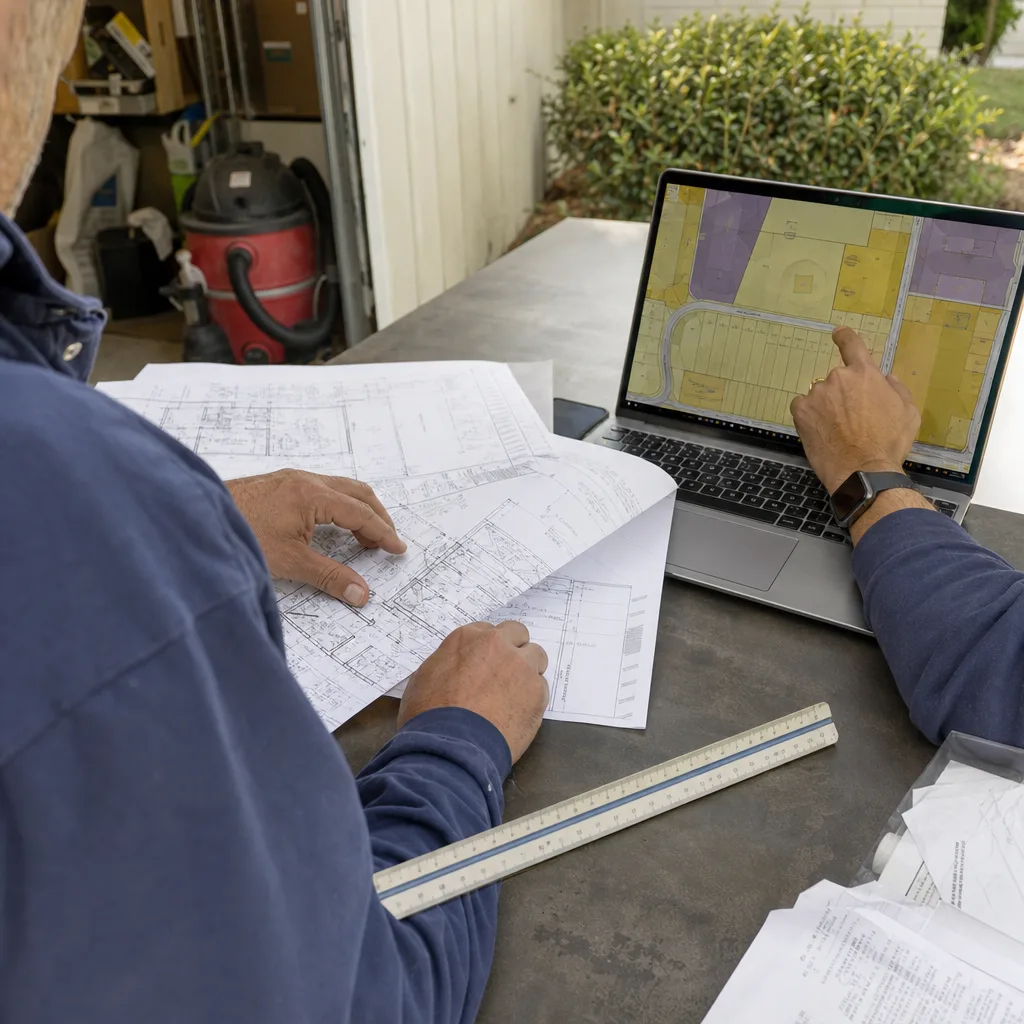
California state law recognizes three ADU types, and Simi Valley permits all three with local size and placement rules. Here’s what each looks like on a typical Simi Valley lot.
Attached ADU
An attached ADU shares at least one wall with the primary dwelling. In Simi Valley, attached ADUs are limited to 50% of the primary dwelling’s existing living area or 1,200 square feet, whichever is less. On a 2,400-square-foot primary home, that means a maximum 1,200-square-foot attached unit. Setbacks follow the primary dwelling’s existing setbacks; you don’t gain additional encroachment rights.
Attached ADUs work well in Simi Valley’s 1970s-1990s neighborhoods, particularly in areas like Indian Hills or Sinaloa Villa, where lots are relatively flat and primary dwellings have generous side yards that can be enclosed. The trade-off: you’re disrupting the primary dwelling’s envelope, which means temporary kitchen/bath relocation if you’re converting existing space, or foundation tying if you’re building new attached square footage.
Detached ADU
A detached ADU is a standalone structure. Simi Valley allows detached ADUs up to 1,200 square feet on lots with single-family dwellings, with the 4-foot side and rear setbacks noted above. Height limit is 16 feet for flat roofs, 18 feet for pitched roofs with a minimum 6:12 pitch. On sloped lots in the Santa Susana foothills, this height limit can be restrictive; we’ve specified new detached ADU in Simi Valley designs with stepped foundations to maintain headroom without exceeding the envelope.
Detached ADUs require utility trenching from the primary dwelling, which on a deep Wood Ranch lot can add $8,000-$15,000 in site work. The sewer lateral must be minimum 4-inch PVC from the ADU to the city main, with cleanouts every 100 feet. On older neighborhoods near Los Angeles Avenue, we’ve found original sewer laterals are 3-inch cast iron; upsizing is not optional if you’re adding fixtures.
Junior ADU (JADU)
A JADU is created entirely within the existing walls of the primary dwelling, with a maximum 500 square feet. Simi Valley requires JADUs to have a separate entrance, an efficiency kitchen (30-inch minimum cooktop, small refrigerator, no dishwasher requirement), and either a new bathroom or shared access to the primary dwelling’s bathroom. The owner-occupancy requirement for JADUs was removed statewide in 2023, but Simi Valley still requires deed restriction recording for JADUs, a $400-$600 county recorder step that detached and attached ADUs don’t need.
JADUs are the fastest-permitting option in Simi Valley, typically clearing plan check in 6-10 weeks versus 12-20 weeks for detached units. They’re also the most financeable with HELOCs, since they’re interior improvements with no structural expansion.
What an ADU Costs in Simi Valley: Realistic Price Ranges
Every project at Ellery ADU Studio receives a written price before any work starts, per Haven Standard Clause 1. The ranges below reflect what we’ve quoted for Simi Valley projects in 2024-2025, all-in from measured drawings through final inspection. Your specific lot conditions will land you somewhere in these bands.
| ADU Type | Size Range | All-In Cost Range | Cost Drivers |
|---|---|---|---|
| Garage Conversion ADU | 400-600 sq ft | $85,000-$140,000 | Slab condition, electrical panel capacity, HVAC routing |
| New Detached ADU | 400-1,200 sq ft | $220,000-$380,000 | Foundation type, utility trench length, roof complexity |
| Junior ADU (JADU) | 150-500 sq ft | $45,000-$85,000 | Bathroom addition vs. shared, kitchen complexity |
| Attached ADU (new construction) | 400-1,200 sq ft | $180,000-$320,000 | Foundation tying, primary dwelling disruption |
These ranges include:
- Measured as-built drawings and permit set (typically 40-60 sheets for detached, 20-30 for conversion)
- Structural calculations and Title 24 energy compliance documentation
- All city and county permit fees
- Construction labor and materials
- Utility connection fees and trenching
- Final inspection and certificate of occupancy
What moves you to the top of the range:
- Hillside lots. Simi Valley’s northern zones require engineered retaining walls for any cut over 4 feet, adding $15,000-$40,000.
- Electrical service upgrades. Many 1970s homes have 100-amp panels; a detached ADU with electric heat and appliances typically requires 200-amp service, adding $3,500-$6,500.
- Sewer lateral replacement. On pre-1980 lots, we’ve found approximately 30% require partial or full lateral replacement to meet current city standards.
We do not quote without a site visit. Under Haven Standard Clause 1, your written price is based on measured conditions, not assumptions. Our garage conversion ADU in Simi Valley page breaks down the specific line items for that project type.
Permit to Certificate of Occupancy: Actual Timelines

Marketing materials often cite “permitting in 30 days.” That is not what we’ve observed in Simi Valley. Here’s the realistic sequence:
- Pre-application consultation (optional but recommended): 2-3 weeks to schedule. Simi Valley Planning offers 30-minute consultations; bring a preliminary site plan. We attend these with clients to document the planner’s verbal guidance in writing.
- Design and permit set preparation: 6-10 weeks for garage conversions and JADUs; 10-16 weeks for detached ADUs. This includes measured drawings, structural engineering, Title 24 calculations, and landscape plan if required.
- Plan check submittal: 1 week for VCAPS upload and fee payment.
- First plan check review: 8-12 weeks for detached ADUs; 4-8 weeks for conversions and JADUs. Simi Valley Planning assigns a primary reviewer; corrections are returned as a numbered list.
- Corrections and resubmittal: 2-4 weeks to address, depending on complexity. Typical correction cycles: 1.2 for conversions, 1.8 for detached units in our experience.
- Permit issuance: 1-2 weeks after final approval.
- Construction: 3-5 months for garage conversions; 6-10 months for detached ADUs, weather-dependent. Simi Valley’s dry season runs April through November; we schedule foundation and framing in this window when possible.
- Inspections: 6-10 inspections for conversions, 12-18 for detached, typically spread across construction.
- Final inspection and certificate of occupancy: 1-2 weeks after passing final, assuming no outstanding liens or utility holds.
Total elapsed time: 8-14 months for most projects, from signed contract to move-in ready. Projects that exceed 14 months usually hit one of three delays: hillside grading permits (separate from ADU permit), utility company trench inspections (SoCal Gas can take 4-6 weeks to schedule), or homeowner-driven design changes after permit issuance, which triggers plan-check requeue.
Under Haven Standard Clause 4 (Timeline Transparency), we provide a Gantt chart at contract signing with permit milestone dates, not just construction dates. The permit set is the critical path item; construction duration is more predictable than plan-check duration.
Why the Design-Build Model Matters for Simi Valley Projects
The most common failure point in ADU projects is not permitting complexity or construction quality. It is the gap between what the designer drew and what the builder bid, which is why we recommend reading our DIY vs Professional ADU: The Simi Valley Homeowner’s Decision Guide before starting.
In a traditional design-bid-build model, an architect produces drawings, the homeowner solicits bids from contractors, and the low bidder discovers conditions the drawings didn’t capture: the existing slab is 3.5 inches, not 4, requiring a new foundation line item; the electrical panel is full, requiring a service upgrade the drawings assumed away; the sewer lateral has a belly at the property line that camera inspection reveals only after permit. Each discovery becomes a change order. The homeowner, caught between a designer who says “the drawings are code-compliant” and a builder who says “this wasn’t in my bid,” absorbs the cost and delay.
Ellery ADU Studio operates as a design-build studio in Simi Valley. The drawings, the permit set, and the construction are a single contract at a single written price. If the slab condition requires a different foundation approach, that is our internal coordination, not your change order. Under Haven Standard Clause 5 (No Surprises), the scope is locked at signing; no door-side upsells, no scope creep.
This matters particularly in Simi Valley because of the city’s specific submittal requirements. Our permit sets include the structural calculation format the city prefers, the VCAPS digital upload specifications, and the fire department technical bulletin references that prevent first-round rejection. A designer who doesn’t build in Simi Valley regularly won’t know that the city requires a tree protection plan for any construction within the dripline of an oak over 12 inches DBH (diameter at breast height, 4.5 feet above ground). We’ve specified oak-preserving foundations on several Big Sky area lots where heritage oaks would have triggered $10,000+ in mitigation if discovered mid-construction.
The 365-Day Done Right Promise applies to the full chain: if the finished ADU is not built to the permitted drawings, we make it right. Not the designer. Not a separate contractor. One entity, one written accountability.
Financing Your ADU: Loans, HELOCs, and Grants
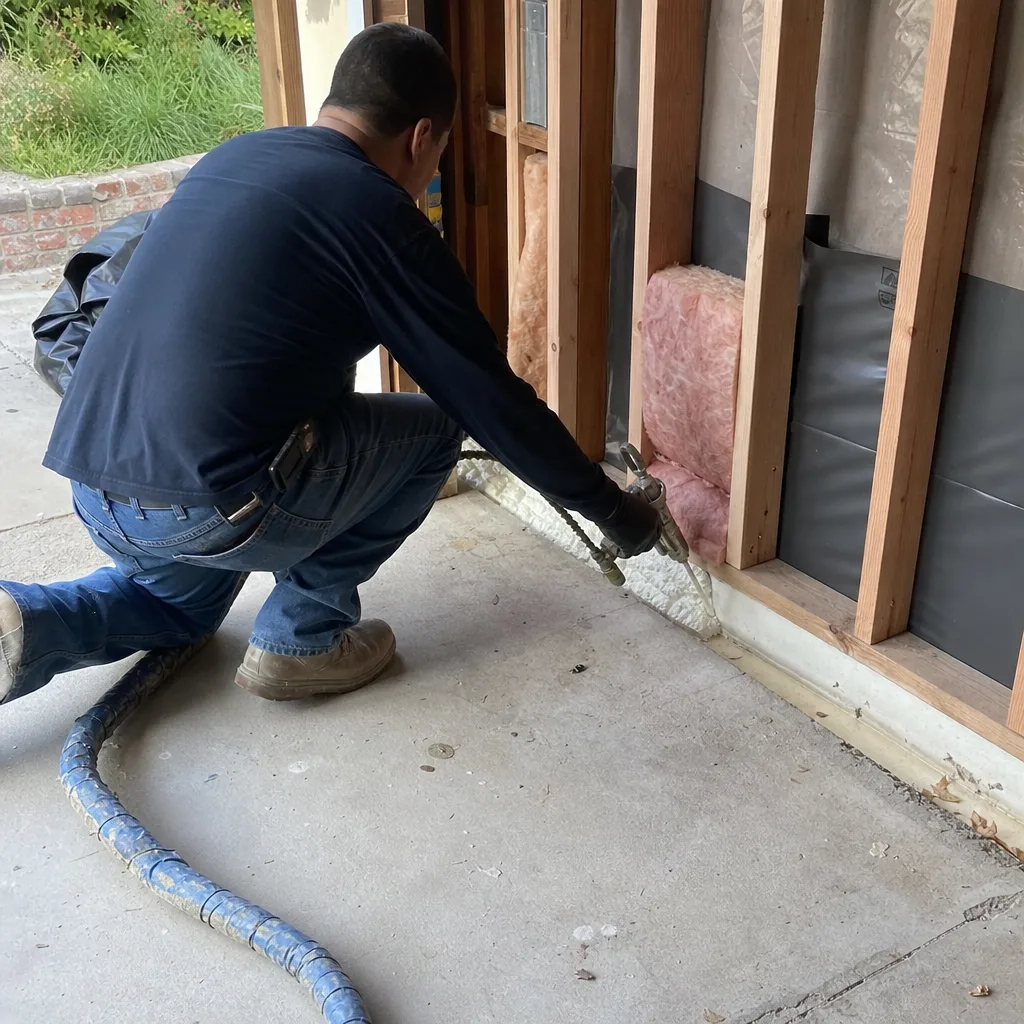
Financing instruments for Simi Valley ADUs fall into three categories, each with different permit requirements and timing.
Home Equity Line of Credit (HELOC)
A HELOC uses your primary dwelling’s equity and does not require permit approval to initiate. Most Simi Valley homeowners who bought between 2015 and 2021 have substantial equity given appreciation in the 93063, 93065, and 93094 zip codes. HELOCs are ideal for JADUs and garage conversions, where loan amounts under $150,000 are common and interest is typically deductible if the ADU is rented. The downside: variable rates, and the ADU itself does not secure the loan, so rental income is not directly factored into underwriting.
ADU-Specific Construction Loan
Several lenders now offer construction-to-permanent loans structured around ADU rental income. These require a permit set and often a signed construction contract to underwrite. The lender orders an as-completed appraisal, projecting ADU rental income based on Simi Valley market rents, which currently run $1,800-$2,800 for studio and 1-bedroom units depending on neighborhood. Key lenders active in Ventura County include RenoFi, Figure, and certain credit unions. These loans typically release funds in draws tied to inspection milestones, which aligns with our documented photo record at each visit.
CalHFA ADU Grant Program
The California Housing Finance Agency offers grants up to $40,000 for predevelopment and construction costs, with income limits tied to Area Median Income. Ventura County’s AMI for 2024 is $92,400 for a household of four; grants are available up to 120% AMI for certain categories. The critical timing point: CalHFA requires a building permit to release construction funds, though predevelopment funds (design, surveys, soil reports) can be accessed earlier. We coordinate CalHFA-compliant permit sets for qualifying clients, including the specific documentation the agency requires for draw requests.
Under Haven Standard Clause 7 (Financing Coordination), we provide permit-set packages formatted for lender submission, including the stamped drawings, written scope, and fixed-price contract that construction lenders require. We do not originate loans, but we do not leave you to explain our drawings to your underwriter.
Prefab and Modular Options for Simi Valley Lots
Prefab and modular ADUs can compress construction duration by 30-50%, but they introduce coordination complexity that the design-build model is specifically structured to handle. Ellery ADU Studio specifies and coordinates prefab systems from Dvele, Mighty Buildings, Boxabl, Plant Prefab, and other manufacturers within the same single contract that covers site-built work.
What prefab means in Simi Valley:
- Factory-built, not site-built. The unit arrives 80-95% complete, requiring foundation, utility tie-in, and finish connections on site. This reduces weather risk and trade coordination.
- Transportation constraints. The 118 freeway and local streets impose width and height limits. A standard module is 12-14 feet wide for highway transport; wider units require escort permits and route surveys that add $2,000-$5,000.
- Foundation requirements. Prefab units still require a site-specific foundation engineered for Simi Valley’s seismic zone (Zone D, moderate-high per California Geological Survey). Dvele and Mighty Buildings provide foundation plans we review against local conditions; Boxabl units require our structural engineer to adapt standard plans for hillside or expansive soil conditions.
- City plan check. Simi Valley accepts factory-built housing plans certified by the Department of Housing and Community Development (HCD), but still requires site-specific foundation, utility, and setback verification. The permit timeline is not eliminated, though it may be shortened if the module carries an HCD insignia.
We’ve found prefab most cost-effective on flat lots with straightforward utility access, particularly in newer Simi Valley neighborhoods like Wood Ranch where setbacks are generous and soil conditions are predictable. On hillside lots, site-built typically wins on total cost when foundation complexity is factored. The analysis is part of our initial consultation; we do not default to prefab or site-built without site-specific evaluation.
Common Mistakes to Avoid
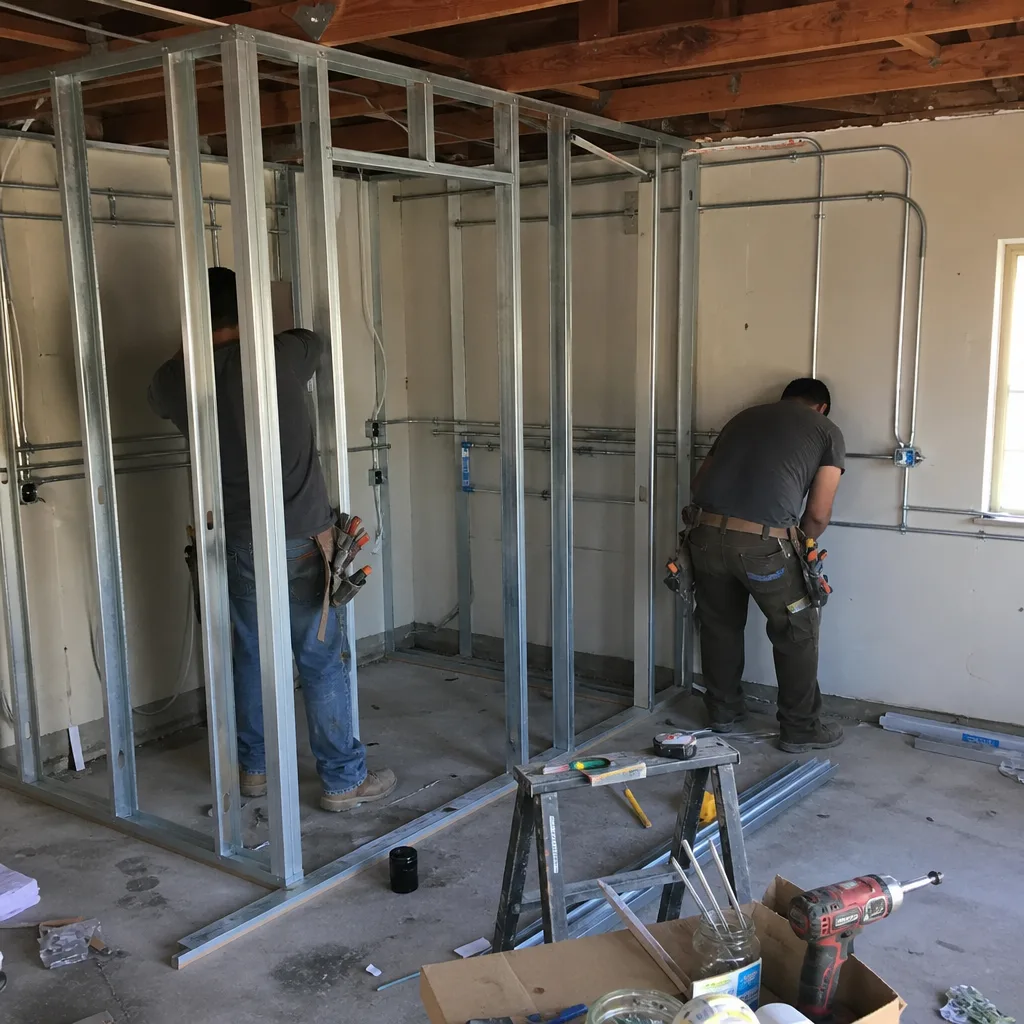
- Assuming LA County rules apply. Simi Valley’s 4-foot setback minimum and specific sewer fee schedule differ from unincorporated Ventura County and all LA County jurisdictions. Generic guides steer you wrong on the specifics that determine permit approval.
- Starting construction before permit issuance. Simi Valley issues stop-work orders and can require demolition of unpermitted work. The city actively cross-references utility service applications against permit records; we’ve seen homeowners flagged when SoCal Gas requests service for an unpermitted ADU.
- Neglecting the oak tree survey. Simi Valley’s oak protection ordinance applies to coast live oak, valley oak, and scrub oak over 12 inches DBH. A single protected tree in your build zone can shift your ADU placement by 20 feet or trigger $10,000+ in mitigation. We order arborist reports early, before design hours are committed.
- Undersizing the electrical service. Many Simi Valley homes built before 1990 have 100-amp panels. Adding a 400-square-foot ADU with electric heat, water heater, and appliances can push combined load over 100 amps. We specify load calculations in the permit set, but homeowners who self-design often discover this at rough electrical inspection, with a 4-week delay for utility scheduling.
- Ignoring the ADU’s impact on primary dwelling resale. A poorly placed ADU that blocks primary dwelling light, parking, or access can reduce main-house value by more than the ADU adds. We analyze sight lines and access in every site plan, not just setback compliance.
- Accepting a bid without a written scope. Verbal estimates and “allowance” line items are the leading source of ADU disputes. Haven Standard Clause 1 exists because we’ve seen too many homeowners stranded mid-project with exhausted budgets and incomplete units.
When to Call a Professional
Call a design-build professional before you’ve committed to a specific ADU type or location on your lot; our How to Hire a ADU Contractor in Simi Valley: A Step-by-Step Guide explains what to look for. The decisions you make in the first two weeks, particularly site placement and utility routing, determine your permit timeline, your construction cost, and your financing options. If you already have a written estimate from another firm, Ellery ADU Studio Simi Valley offers a Free Second Opinion. We’ll review the scope, the permit strategy, and the price against what we’ve seen on comparable Simi Valley lots.
Specific scenarios where professional guidance pays for itself: hillside lots requiring grading permits, properties with mature oak trees, lots with shared driveways or utility easements, and any project where you’re considering prefab or modular construction. The coordination between manufacturer, foundation engineer, and city plan check is not a homeowner-managed process.
Ellery ADU Studio Simi Valley offers free estimates in Simi Valley. Call (820) 444-6584 to schedule a site visit and receive a written price before any work begins.
Frequently Asked Questions
Garage conversion ADUs typically run $85,000-$140,000 all-in, new detached ADUs $220,000-$380,000, and JADUs $45,000-$85,000, with hillside lots, electrical upgrades, and sewer lateral replacement pushing toward the top of each range. Every Ellery ADU Studio project receives a written price before work starts, per Haven Standard Clause 1. Call (820) 444-6584 for a site-specific estimate.
From contract signing to permit issuance typically takes 4-6 months for garage conversions and JADUs, 6-9 months for detached ADUs, depending on plan-check queue depth and correction cycles. Construction adds 3-10 months. Total project duration averages 8-14 months. We provide a Gantt chart with permit milestones at contract signing.
Yes, but hillside construction triggers additional requirements: engineered grading plans for cuts over 4 feet, retaining walls designed for seismic loads, and often a geotechnical report. These add $15,000-$40,000 to typical costs and 4-8 weeks to permitting. We’ve designed and built hillside ADUs in the Santa Susana foothills; the key is early soil and slope analysis.
No. California removed the owner-occupancy requirement for JADUs in 2023. Simi Valley still requires a deed restriction recorded with Ventura County, costing $400-$600, but does not require you to occupy either unit. This change made JADUs significantly more attractive as rental investments.
Yes, but not proportionally to market value. Under Proposition 13 rules, your existing primary dwelling assessment is unchanged. The ADU is assessed at its construction cost as new improvement value, typically at 1% of cost plus local bonds and fees. A $200,000 ADU generally adds approximately $2,000-$2,500 annually to property tax, not the full rental income value. Ventura County Assessor provides specific calculations upon request.
Yes. Simi Valley accepts HCD-certified factory-built housing with site-specific foundation and utility plans. Prefab can reduce construction duration by 30-50% on suitable lots. We specify and coordinate Dvele, Mighty Buildings, Boxabl, and Plant Prefab systems within our single-contract model, including manufacturer liaison, foundation engineering, and city plan-check coordination. Flat lots with straightforward utility access are typically the best prefab candidates in Simi Valley.
The Bottom Line
Building an ADU in Simi Valley requires navigating a specific stack of city, county, and state rules that interact in ways generic California guides do not address. Your jurisdiction, your lot conditions, and your financing timeline are determined in week one, not mid-construction. The design-build model eliminates the designer-builder blame gap that derails most projects, and a written price before work starts protects against the change-order spiral that exhausts budgets. With realistic cost ranges, actual permit timelines, and documented accountability at each stage, you can evaluate any proposal with confidence before signing anything. Once built, follow our Seasonal ADU Care for Simi Valley: Year-Round Homeowner’s Guide to protect your investment.
Written by Nadia Ellery, Owner at Ellery ADU Studio Simi Valley, serving Simi Valley since 2015.