
Last updated September 25, 2026
ADU Warning Signs: A Simi Valley Homeowner’s Reference Guide
Here is a number that should unsettle you: roughly one in four ADU projects in Ventura County stalls or fails within the first six months, not because of bad luck, but because the warning signs were visible in the first proposal meeting and went unchallenged. In Simi Valley, where the hills create drainage complications most out-of-town firms underestimate and where the city’s plan-check queue can add eight to twelve weeks to a timeline, those warning signs carry real financial weight. This guide, alongside our The Complete Guide to ADU in Simi Valley, catalogs the specific signals that an ADU project is heading toward failure, before you sign anything, before you hand over a deposit, before the first wall goes up.
Quick Answer
The most dangerous ADU warning signs appear in contract language, permit timelines, and communication patterns before construction begins. Watch for lump-sum bids without line-item allowances, promises to “pull permits after we break ground,” preliminary renderings presented as permit-ready drawings, deposit requests above California’s legal limit, and firms that cannot name your assigned project manager. These five signals predict cost overruns, unpermitted work, and project abandonment with near-certainty.
Table of Contents

- Contract Red Flags: What Vague Language Really Costs You
- Permit Red Flags: Simi Valley’s Real Timeline
- Design Red Flags: Renderings vs. Permit-Ready Drawings
- Financial Red Flags: Deposits, Payment Schedules, and Change Orders
- Communication Red Flags: Who Actually Runs Your Project
- Simi Valley-Specific Risks: Hills, Drainage, and Local Code
- How to Vet an ADU Firm: A 7-Step Checklist
- Common Mistakes to Avoid
- When to Call a Professional
- Frequently Asked Questions
- The Bottom Line
Contract Red Flags: What Vague Language Really Costs You
The phrase “we’ll pull permits after we break ground” is not a scheduling preference. It is an admission that the work will be performed without approved drawings, leaving the homeowner liable for unpermitted construction that can require demolition to resolve. We have seen this exact scenario in Simi Valley’s Royal Hills neighborhood, where a homeowner accepted this logic in 2022 and spent eleven months and $34,000 in additional fees to bring a partially completed garage conversion into compliance.
A legitimate ADU contract in Simi Valley should function as a technical document, not a handshake in writing. For help finding the right professional, see our How to Hire a ADU Contractor in Simi Valley: A Step-by-Step Guide. Here is what to demand:
- Line-item scope with allowances. Every major system, foundation, framing, electrical, plumbing, HVAC, and finishes, should carry its own dollar figure. A lump-sum bid with no breakdown is a license to cut corners where you cannot see them.
- Written change-order procedure. Under Ellery ADU Studio Simi Valley home Haven Standard Clause 5 (No Surprises), the scope is locked at signing; no door-side upsells, no scope creep. Any firm that cannot produce a written change-order policy will rely on verbal agreements that evaporate under pressure.
- Named permit holder. The contract must specify who pulls the permit. If the answer is “we’ll figure that out later,” the permit will be pulled in no one’s name, or worse, in your name without your understanding of the liability.
- Insurance and license verification. The license number should appear in the contract, not just on a business card. In California, you can verify this through the Contractors State License Board. We put ours on every page.
Watch for weasel words: “approximately,” “as needed,” “builder’s standard,” and “to be determined.” Each is a placeholder for a future argument. A design-build studio operating under a single contract eliminates the designer-versus-builder blame gap because the same entity owns the drawings and the construction. When the foundation line item specifies “4-inch existing slab, verified adequate for conversion per geotechnical note,” you know what you are paying for. When it says “foundation work as required,” you are buying a blank check.
The 365-Day Done Right Promise exists because contracts without this specificity produce defects that surface after the final check clears. If the finished ADU is not built to the permitted drawings, we make it right, in writing, before the project starts. A firm that will not put this in writing is telling you something about their expected defect rate.
Permit Red Flags: Simi Valley’s Real Timeline
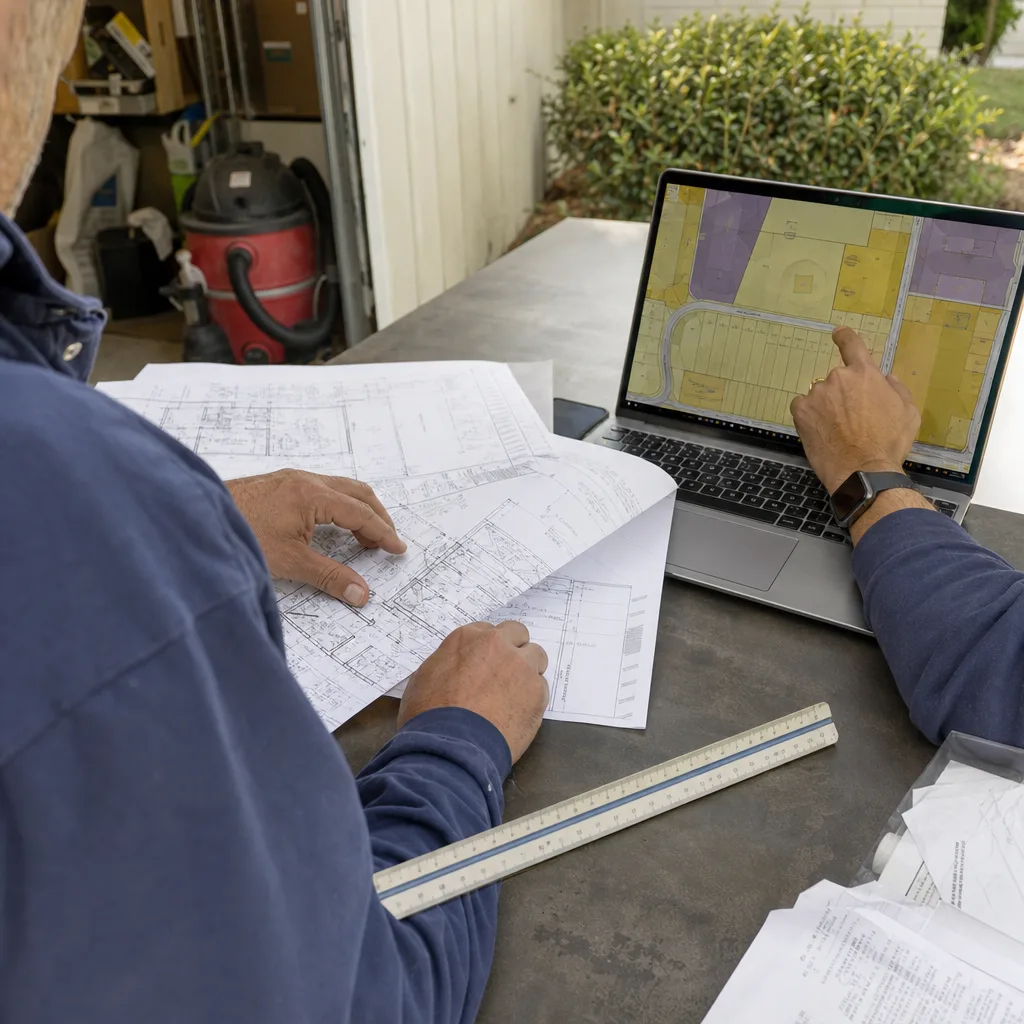
Simi Valley’s Building and Safety Division processes ADU permits through Ventura County’s shared plan-check system, and the queue length is not a secret. In 2024, standard plan check for a detached ADU ran ten to fourteen weeks, with corrections adding another four to eight. Any proposal promising permit approval in “four to six weeks” is either ignorant or lying, and neither is acceptable in a firm handling your six-figure investment.
Specific permit red flags to challenge:
- “We handle all the permitting.” Ask who, specifically, submits the application and responds to corrections. A named permit expediter or project manager should appear in your contract. At Ellery, the permit set is the core product, not an afterthought, and the same designer who drew the plans shepherds them through correction cycles.
- No Title 24 energy documentation. California’s Energy Code compliance is not optional. Preliminary renderings without CALGreen or Title 24 notes are not permit-ready. We have reviewed competitor drawings where the energy compliance page was literally blank, submitted with a wink that “the city won’t notice.”
- Timeline promises without correction cycles built in. First-round plan-check approval is rare. A realistic timeline shows: submission, initial review, correction response, resubmission, and final approval as distinct phases.
- No discussion of Simi Valley’s hillside development requirements. The city’s Grading and Drainage Ordinance applies to many sloped lots in neighborhoods like Wood Ranch and Indian Hills. A firm that does not mention drainage calculations or retaining-wall triggers has not reviewed your specific site.
The ADU Design & Permitting in Simi Valley process demands documentation that survives scrutiny. Our permit sets include existing utility locations, geotechnical notes where required, and drainage plans that account for Simi Valley’s clay-heavy soils and seasonal saturation patterns. A firm presenting a 3D rendering as “your permit package” is selling you a picture, not a legal document.
Design Red Flags: Renderings vs. Permit-Ready Drawings
Preliminary renderings presented as permit-ready drawings are a deception that costs homeowners six months and tens of thousands of dollars. A rendering shows color, texture, and atmosphere. A permit set shows structural calculations, egress dimensions, fire-rated assemblies, and utility routing. They are not the same document, and any firm that treats them as interchangeable is either incompetent or deliberately misleading.
Specific design warning signs:
- No existing conditions survey. The permit set must show what is actually on your property: the existing garage slab thickness, the sewer lateral location, the electrical service panel capacity, the gas meter size. In Simi Valley’s older neighborhoods like Simi Hills, original 1960s electrical panels often cannot support an ADU load without service upgrades. A design that assumes standard conditions without verification will fail plan check or require expensive change orders.
- Missing Title 24 energy compliance documentation. This is not a formality. The energy calculations determine your insulation requirements, window specifications, and HVAC sizing. A set without these pages will be rejected on submission.
- No fire separation details for garage conversions. Converting a garage to living space requires specific fire-rated assemblies between the ADU and any remaining garage area. We have seen plans where this detail was entirely absent, with the assumption that “the inspector will tell us what to do.” The inspector will tell you to hire a designer.
- Prefab or modular systems without brand-specific engineering. If a firm proposes a New Detached ADU in Simi Valley using Abodu, Cover, or Dvele systems, the permit set must include that manufacturer’s engineering stamps and foundation details. Generic foundation plans do not suffice. Our studio specifies and coordinates these systems within the same single contract, with manufacturer documentation integrated into the submittal.
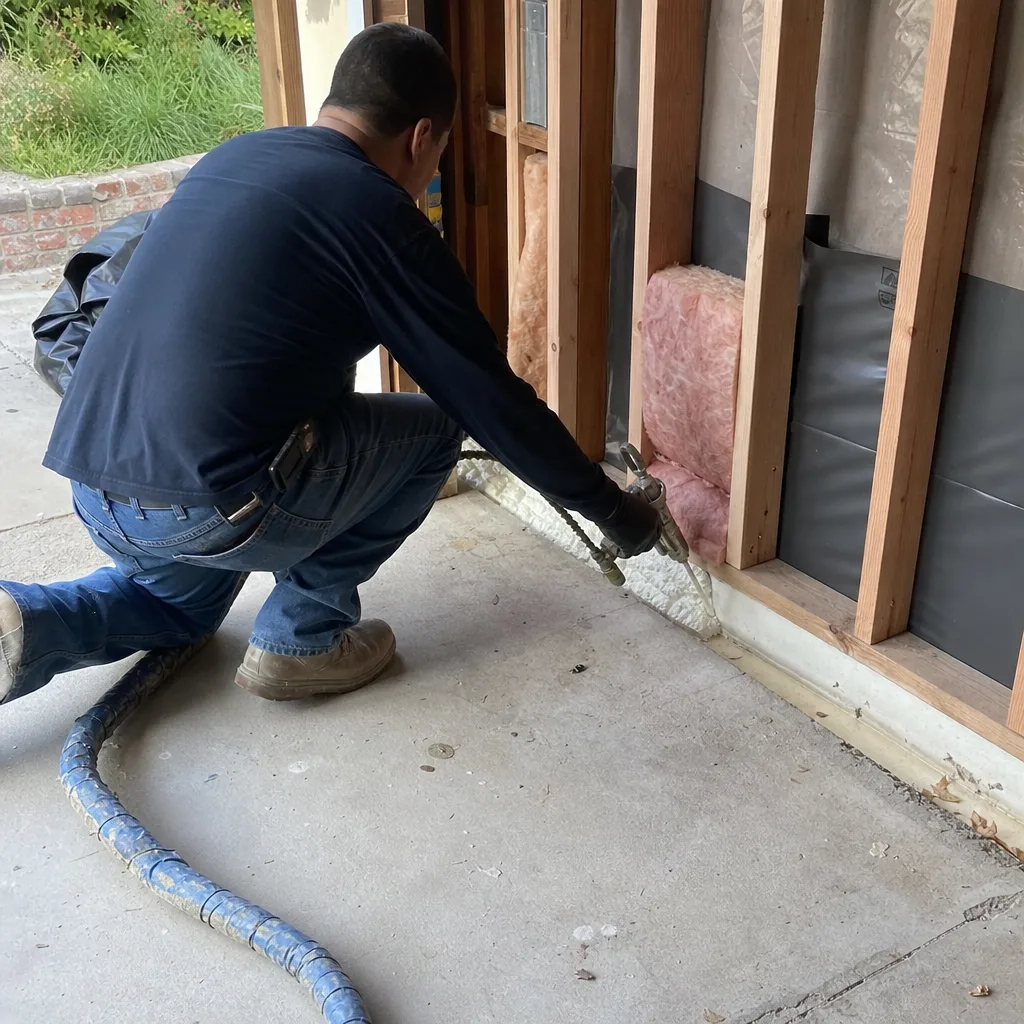
The documented photo record is part of our process because existing conditions are often different from assumptions. When we find a 3-inch slab instead of 4 inches in a Simi Valley garage conversion, we photograph it, note the implication for the foundation line item, and adjust the permit set before submission. A firm that skips this step is designing for a property that may not exist.
Financial Red Flags: Deposits, Payment Schedules, and Change Orders

California law limits pre-construction deposits to $1,000 or 10% of the contract price, whichever is less. A request exceeding this is not a “standard practice” or “industry norm.” It is illegal, and it is a leading indicator of a firm’s cash-flow problems. We have seen Simi Valley homeowners lose $15,000 deposits to firms that used the money to finish previous jobs, leaving no funds to start theirs.
Red flags in financial structure:
- Large deposits with no payment schedule tied to milestones. Legitimate progress payments align with verifiable construction phases: foundation complete, framing inspection passed, rough utilities signed off, final inspection. Each payment should require your approval of documented work.
- No written change-order procedure with pricing methodology. Under Haven Standard Clause 5, the scope is locked at signing. Change orders, when truly necessary, are priced at documented cost plus a stated markup, not invented at the door.
- Allowances that total less than 50% of finish costs. Low allowances make the initial bid look competitive while guaranteeing overruns. A realistic allowance for Simi Valley ADU finishes in 2025 runs $45-$75 per square foot for mid-grade materials, more for premium selections.
- Pressure to sign before “pricing expires.” This is urgency theatre, and it has no place in a six-figure decision. Our written price before any work starts, per Haven Standard Clause 1, is valid for review at your pace. The words “call for a quote” do not appear anywhere on our site because they contradict the entire point of upfront pricing.
Garage conversion ADUs in Simi Valley typically run $165,000-$285,000 all-in, drawings through final inspection, depending on existing conditions and finish level. New detached ADUs run $285,000-$450,000. Any bid significantly below these ranges without clear explanation is using allowances, exclusions, or undocumented assumptions to hide true cost. We name these ranges on the page because a homeowner researching at 10 PM deserves real numbers, not a callback promise.
Communication Red Flags: Who Actually Runs Your Project
The inability to name your assigned project manager is not a staffing detail. It is evidence that no one is accountable for your project, and accountability is the single variable that predicts ADU completion. In our experience across 900+ ADUs designed, permitted, and built since 2015, the projects that fail almost always failed first in communication structure.
Specific signals to test:
- Ask who responds to plan-check corrections. The correct answer is a named individual with relevant credentials, not “our team” or “the office.” At Ellery, the designer who created your permit set manages correction responses, because no one else understands the design intent.
- Request written responses to three scope questions. A firm that will not put answers in writing will not stand behind them later. We document every scope clarification in writing, because verbal agreements are not admissible in disputes.
- Call references and ask specifically: “Was the permit pulled in your name or the contractor’s?” References who cannot confirm this, or who report permits pulled after construction began, are describing unpermitted work that transferred liability to the homeowner.
- Test the phone system. A live person answers calls 24/7 at our studio, because project questions do not observe business hours. Voicemail queues and unreturned callbacks predict the communication pattern during construction, when delays cost money.
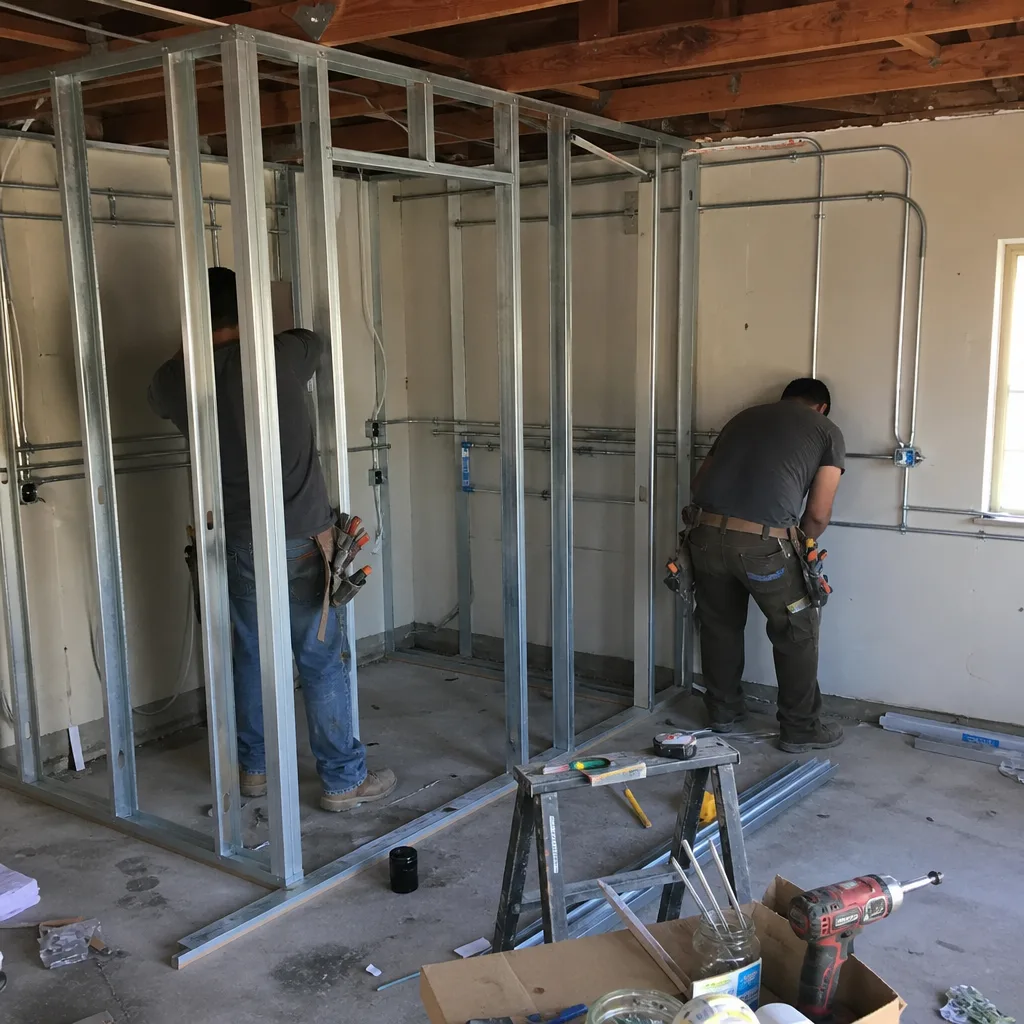
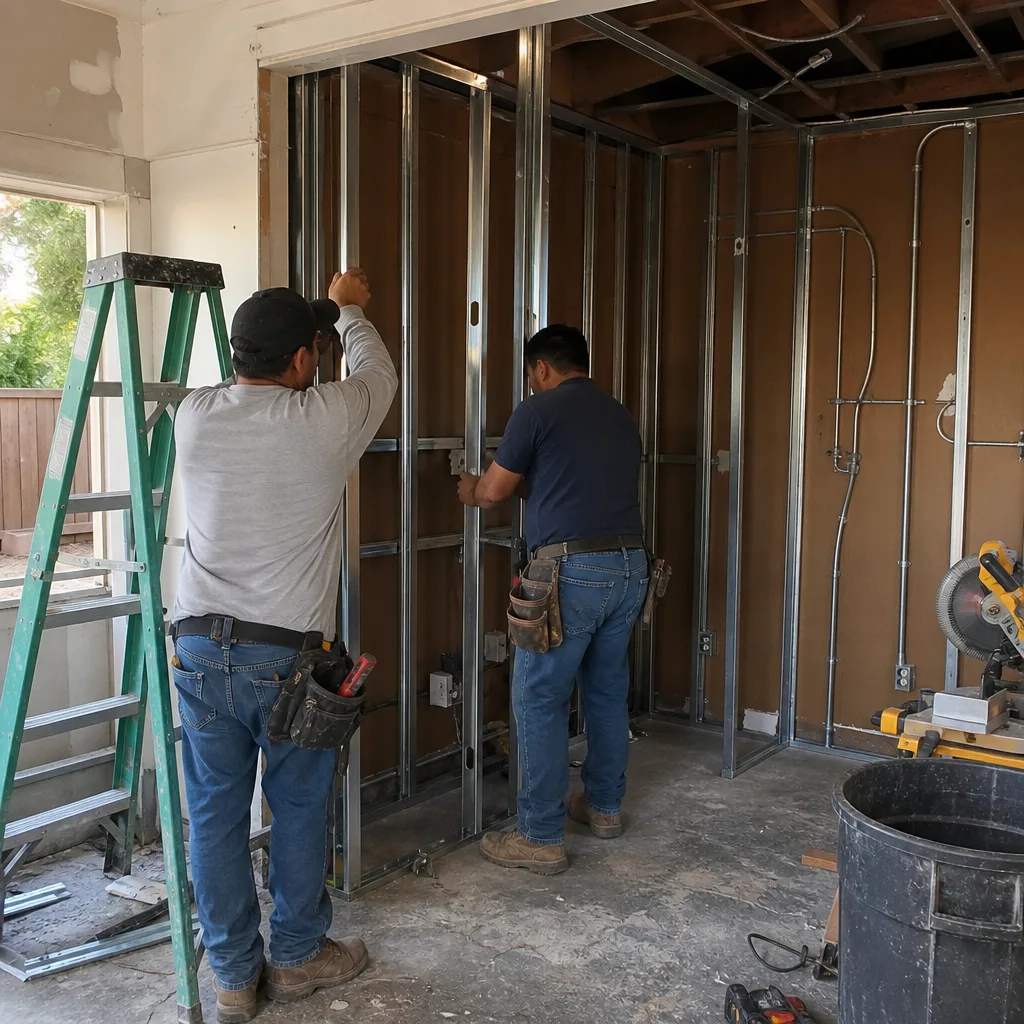
The Garage Conversion ADU in Simi Valley process involves fifteen to twenty inspections over six to nine months. A project manager who disappears after week three leaves you negotiating with subcontractors and interpreting correction notices alone. This is why our model assigns a single point of contact from initial survey through final walkthrough, with a documented photo record on every visit so you see what was found and what was done, not a summary of how it felt.
Simi Valley-Specific Risks: Hills, Drainage, and Local Code
Simi Valley’s geography creates ADU complications that flatland firms from Los Angeles or Ventura rarely anticipate. The Santa Susana Mountains define the northern boundary, and the valley floor tilts south toward the Arroyo Simi. This matters for your project in specific, costly ways.
Hillside grading triggers. Lots with slopes exceeding 15% require grading plans, drainage calculations, and often retaining walls that add $15,000-$40,000 to project cost. A firm that does not walk your lot with a grade rod or review LIDAR data before bidding is guessing. In Wood Ranch, we regularly encounter undocumented fill from 1980s development that requires geotechnical investigation before foundation design.
Clay soil expansion. Simi Valley’s soils contain significant clay content that expands when saturated and shrinks in drought. Foundation designs must account for this movement, particularly for slab-on-grade construction. A generic foundation detail from a flatland jurisdiction will crack within two seasons.
Fire hazard severity zones. Portions of Simi Valley fall within Very High Fire Hazard Severity Zones, triggering Chapter 7A wildfire construction requirements: ember-resistant vents, fire-rated exterior assemblies, and defensible space calculations. These are not upgrade options; they are code mandates that must appear in the permit set.
Septic and sewer limitations. Older neighborhoods on septic systems, particularly in the hills, face additional scrutiny for ADU connections. Ventura County Environmental Health requires soil percolation testing and reserve area verification that can add four to six weeks to permitting. A firm unfamiliar with these requirements will discover them mid-project.
These are not abstract risks. In 2023, we reviewed a competitor’s failed project in Indian Hills where the foundation was designed for standard soils, cracked in the first rainy season, and required $23,000 in remediation. The warning sign was visible in the permit set: no geotechnical note, no drainage detail, generic foundation callout. A homeowner with this guide would have spotted it.
How to Vet an ADU Firm: A 7-Step Checklist
- Verify the license. Check the Contractors State License Board for current status, bond, and workers’ compensation. The license number should appear on the firm’s website and in your contract.
- Demand a written price before any work starts. Not an estimate range, not a “ballpark,” a written price with line-item scope. Per Haven Standard Clause 1, this is non-negotiable in our practice.
- Request the permit set for a completed project. Redact the address if needed, but review the technical content: energy compliance pages, structural details, utility locations. Preliminary renderings are not acceptable.
- Call three references and ask specific questions: Was the permit pulled before construction? Was the final price within 10% of the written quote? Who was your project manager? Would you hire them again?
- Test communication responsiveness. Send a detailed scope question by email. A firm that cannot respond in writing within two business days will not manage a multi-month project effectively.
- Review the change-order policy. It should be written, with pricing methodology stated. Vague language here predicts disputes later.
- Confirm the warranty in writing. The 365-Day Done Right Promise covers defects in workmanship against the permitted drawings. A firm that warranties only “satisfaction” is warranting nothing specific.
Our Free Second Opinion on any written estimate exists because many homeowners receive proposals that fail three or more of these checks. We review the document, flag the risks, and explain what a compliant alternative looks like. No obligation, because informed homeowners make better clients.
Common Mistakes to Avoid
- Accepting a lump-sum bid without line-item breakdown. You cannot compare bids, verify allowances, or dispute change orders without this documentation. It is not “more detail than I need”; it is the minimum for financial control.
- Assuming “design-build” means single-contract accountability. Some firms subcontract design to third parties while presenting a unified front. Verify that the same entity owns both design liability and construction performance.
- Ignoring Simi Valley’s hillside requirements. A flatland contractor’s standard details will fail on sloped lots. Demand site-specific geotechnical and drainage analysis.
- Paying deposits above California’s legal limit. The $1,000 or 10% rule protects you from firms using your money to finance other projects. No legitimate studio needs more to begin design work.
- Permitting after construction begins. This is not a scheduling optimization; it is unpermitted construction that exposes you to stop-work orders, fines, and demolition requirements.
- Failing to verify that references’ permits were pulled in the firm’s name. Permits pulled in the homeowner’s name, or not at all, indicate the firm operated without proper licensing or insurance for that project.
- Choosing based on lowest initial bid. In Simi Valley’s market, a bid 20% below comparable proposals typically indicates omitted scope, unrealistic allowances, or planned change-order escalation.
When to Call a Professional
Call a design-build professional when you have reviewed a proposal and cannot verify the permit timeline, when the deposit request exceeds legal limits, when the scope language is vague, or when you simply need a second set of eyes on a written estimate already in hand. See our DIY vs Professional ADU: The Simi Valley Homeowner’s Decision Guide to weigh your options. These are not signs of indecision; they are signs of due diligence on a significant investment.
Ellery ADU Studio Simi Valley offers free estimates in Simi Valley. Call (820) 444-6584 to schedule yours. Every project is quoted with a written price before any work begins, governed by The Haven Standard, and backed by our 365-Day Done Right Promise. A live person answers calls 24/7.
Frequently Asked Questions
Garage conversion ADUs in Simi Valley typically run $165,000-$285,000 all-in, from drawings through final inspection, while new detached ADUs run $285,000-$450,000 depending on size, site conditions, and finish level. Hillside lots with grading requirements or septic limitations fall at the higher end. Call (820) 444-6584 for a written price on your specific property, estimates are free.
The phrase “we’ll pull permits after we break ground” is the most dangerous signal, because it admits the work will proceed without approved drawings and exposes the homeowner to unpermitted construction liability. A legitimate firm pulls permits before construction begins and can show you the approved permit set. Call (820) 444-6584 if you have seen this language in a proposal, we offer free second opinions.
Standard plan check for a detached ADU in Simi Valley runs ten to fourteen weeks through Ventura County’s shared system, with corrections adding four to eight more. Any proposal promising four to six weeks is unrealistic. Realistic timelines build in correction cycles and site-specific requirements like hillside grading or septic review. Call (820) 444-6584 for a permit timeline based on your property’s actual conditions.
Yes, prefab and modular systems from brands including Abodu, Cover, and Dvele can be permitted and installed in Simi Valley, but the permit set must include manufacturer-specific engineering stamps and foundation details. Generic foundation plans will fail plan check. Our studio specifies and coordinates these systems within the same single contract, with documentation integrated into the submittal. Call (820) 444-6584 to discuss prefab options for your site.
California limits pre-construction deposits to $1,000 or 10% of the contract price, whichever is less. Any request above this is illegal and typically signals cash-flow problems. At Ellery, we do not request deposits that exceed this limit, and our payment schedule ties each installment to verifiable construction milestones. Call (820) 444-6584 to review a payment schedule you have been offered.
Lots with slopes exceeding 15% require grading plans, drainage calculations, and often retaining walls. In Simi Valley neighborhoods like Wood Ranch and Indian Hills, undocumented fill from 1980s development may trigger additional geotechnical investigation. A site survey with grade measurement is essential before foundation design. Call (820) 444-6584 to schedule a site evaluation.
The Bottom Line
The warning signs that predict ADU failure are visible before you sign: vague contract scope, unrealistic permit timelines, preliminary renderings sold as permit drawings, illegal deposit requests, and communication structures with no named accountability. In Simi Valley’s specific conditions, hillside requirements, clay soils, fire hazard zones, and septic limitations add further tests of a firm’s local competence. The homeowners who avoid these failures are not construction experts; they are careful readers who demand documentation, verify claims, and recognize that a six-figure investment deserves more than a handshake and a rendering. Explore more guides & resources to protect your project.
Written by Nadia Ellery, Owner at Ellery ADU Studio Simi Valley, serving Simi Valley since 2015.